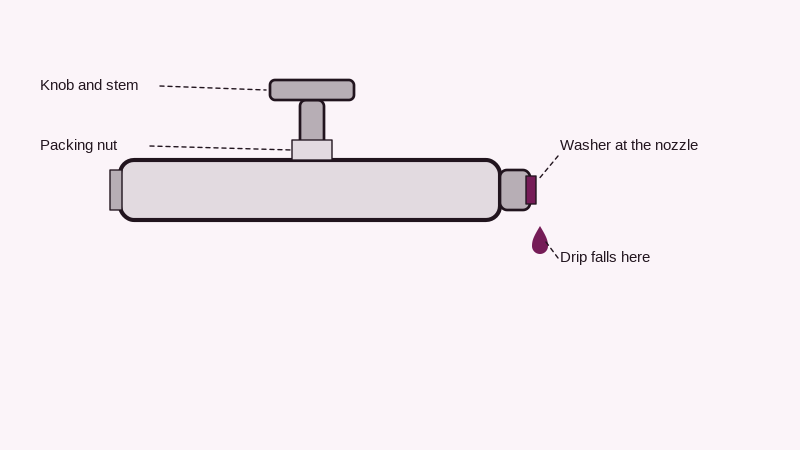
With the hose off, open and then close the tap and watch for the exact spot where moisture shows. Beading at the nozzle after you close it blames a tired washer. A weep around the knob's stem blames the packing. Damp where the pipe meets the house points to something hidden in the wall. The first two suit an owner, and more fixture topics sit in the overview of fixture repairs.
Which part is the leak coming from?
The location of the water identifies the part. Nozzle drips point to a washer or seat, stem seepage to packing, a leak at the hose threads to a cracked hose washer, and a stained wall or wet floor indoors to plumbing behind the faucet. Reading it correctly saves you from taking the whole spigot apart for a cheap rubber ring.
| Where the water shows | Usual cause | Remedy |
|---|---|---|
| Beads at the nozzle when closed | Washer or seat worn | New washer or stem |
| Seeps at the knob when open | Packing loose or dry | Snug the nut, renew packing |
| Squirts at the hose thread | Hose washer cracked | Drop in a new washer |
| Damp wall or floor indoors | Fitting or pipe behind it | Plumber |
| Mist from a cap on the nozzle | Vacuum breaker failing | Replace breaker or faucet |
That cap is a vacuum breaker, an anti-backflow part many hose faucets carry. If it mists while the water runs, it is wearing out. Backflow in general is explained in backflow prevention testing.
How do I stop seepage around the knob?
Release the line pressure, then tighten the packing nut behind the knob roughly a quarter turn. If it still weeps, take off the knob, back the nut out and wrap in fresh packing string, a few turns' worth, or swap the packing washer under it. Reassemble and test. Overtightening makes the knob stiff, so go gently.
Order of work:
- Shut the supply to the exterior line, commonly in a garage or under the house, or use the main.
- Open the spigot so it drains.
- Remove the knob screw and lift the knob off.
- Tighten the nut a little, or unscrew it and renew the packing.
- Put it back together, reopen the supply, and watch.
Should the outdoor line lack its own shutoff while the main refuses to close fully, stop and book a plumber. Old valves snap when forced.
How do I fix a nozzle that drips?
Shut the water, take off the knob, unscrew the stem, put a new rubber washer on its tip and look over the seat inside the body for pitting. Match the new washer to the old. A rough seat or crusty stem is the signal to install a whole new spigot, which usually outlasts a patched one.
Take the old washer to the store, since sizes vary. If a fresh washer does not stop the dripping, suspect the seat. Some stems are cartridges: pull the whole stem out and drop in an identical one.
Water at the hose connection is often only a cracked rubber disk inside the hose end, so replace that before condemning the faucet.
Why is there water inside the wall?
Most often a joint behind the faucet has let go, or the valve deep inside a frost-free sillcock has worn, letting water escape within the wall. A hose left on through cold nights can also trap water and stress the pipe. Wetness indoors means the wall must be opened, so bring in a plumber before rot spreads.
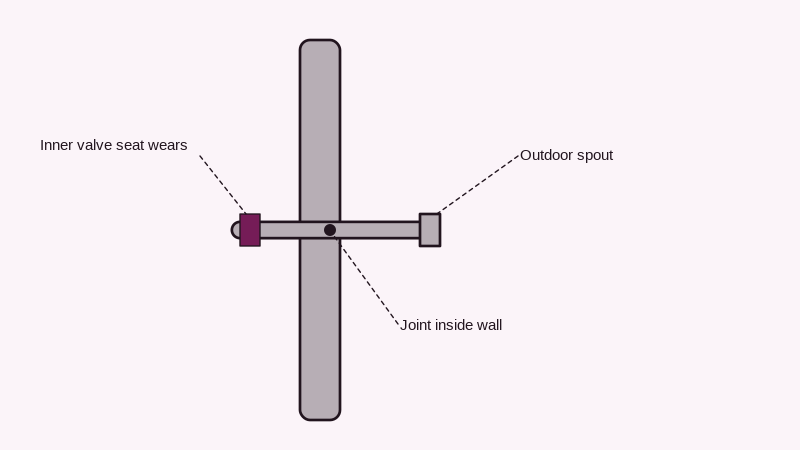
Look at the room behind the spigot, the garage, or the crawl space for stains, soft drywall and a musty smell. A meter dial that keeps creeping while every tap is closed also hints at a hidden leak. According to the EPA, an average home loses over 9,300 gallons a year to leaks, and an outdoor line can leak unnoticed for ages, a pattern covered in why water bills run high.
Unhooking hoses when nights turn cold is still a sound habit, since trapped water strains the faucet.
Repair or replace the spigot?
Swap in a new one when the body has cracked, the threads have stripped, the seat is pitted, the knob spins loose, or a repair has already failed. A new hose faucet is an inexpensive part, and many are a straight swap when the pipe is reachable and the connection type matches. Soldered copper joints and anything inside the wall are for a plumber.
Choose one with a built-in vacuum breaker, note whether your pipe is threaded or soldered, and measure the size. Indoor taps are treated in fixing a leaky faucet, and fixing a leaky outdoor faucet takes another route to the same task.
Many north Valley houses date from the 1950s to 1970s, so original steel or copper may sit behind an old spigot. Tell us about the problem through the quote form, which forwards it to a local plumbing business. Where we work is listed on the Mission Point Plumbing front page.
Common questions
How long will the repair take?
Tightening packing or swapping a washer runs around thirty minutes once the water is off and you have the part. A complete spigot replacement takes longer, and a hidden-pipe problem calls for a plumber's visit. Any bid should state a time frame for the work.
What questions go to a plumber for an outdoor faucet job?
See if the price covers the faucet, the vacuum breaker and any wall repair, if the supply line gets a leak test, and how long the visit lasts. Verify the contractor on the state licensing board and also ask for the findings in writing.
Is it okay to leave the spigot dripping?
For a short while, yes, though it wastes water and soaks the soil by the foundation. Until the repair, close the hose-end valve or shut the exterior line, and put a bucket under a steady drip. Dampness on the wall is different and should not wait.
Is a washer enough, or must the faucet be replaced?
A washer is enough if the stem and seat look healthy. A rough seat, corroded stem or cracked body calls for replacement. If unsure, try the washer first since it costs little, then move up to the stem or the whole faucet if the drip returns.
Must someone be home when the plumber comes?
Someone should point out the faucet and shutoffs and approve any wall opening. Renters should tell the landlord. Mention gates, dogs and parking when booking, and say whether the faucet is in a locked side yard. If no one can be there, say so on the form and the visit can be scheduled around access.