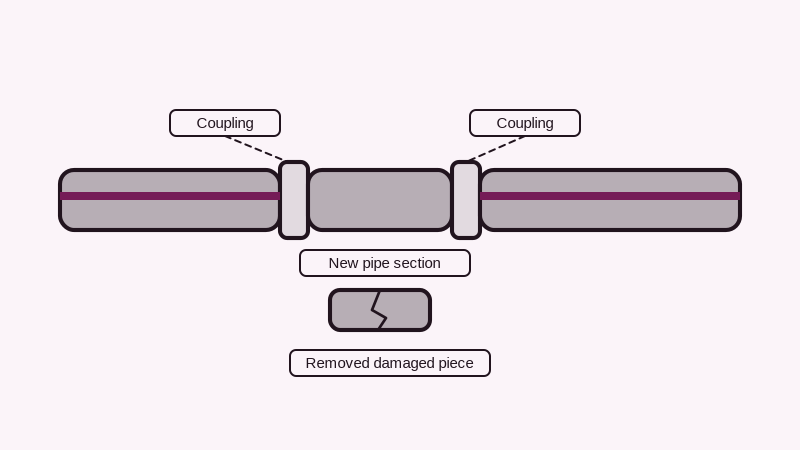
Close the supply, empty the line from a lower faucet, dry the area and inspect the pipe. A minor drip at a fitting may only need tightening or a replacement part, whereas a split or pinhole in the pipe wall calls for cutting that stretch out and fitting new pipe. Once the job is bigger than a quick fix, Mission Point Plumbing can forward your request to a local plumber, who then visits.
Plenty of north Valley houses built from the 1950s to the 1970s have copper or galvanized supply lines that have worked for decades. At that age pinholes, corroded joints and cracked fittings are common, and a minor leak left alone can become water damage.
Where do I start when a water pipe springs a leak?
Shut the valve closest to the leak, or the main if the nearer one is hard to find, then open the lowest tap in the house until the line runs dry. Clear belongings from the area, mop standing water and cut power to wet outlets at the breaker panel, never at the wall.
Photograph the damage for any insurance claim. Set a bucket or towels under the drip and note where water first appeared. A ceiling bulge can be pierced with a small hole so the water drains into a bucket, which keeps the whole panel from collapsing.
Locate your main shutoff before any leak occurs. Most homes have it at the meter, on the street-facing side, or where the line enters at the garage wall. Operate it once a year to keep it free.
How do I find a leak I cannot see?
Concealed leaks show themselves through a high water bill, a meter spinning while every fixture is off, stains, a musty smell, warm floor patches or the sound of water in the walls. Pinpointing the spot takes listening equipment, pressure tests and sometimes thermal imaging, all before anyone cuts into drywall or concrete.
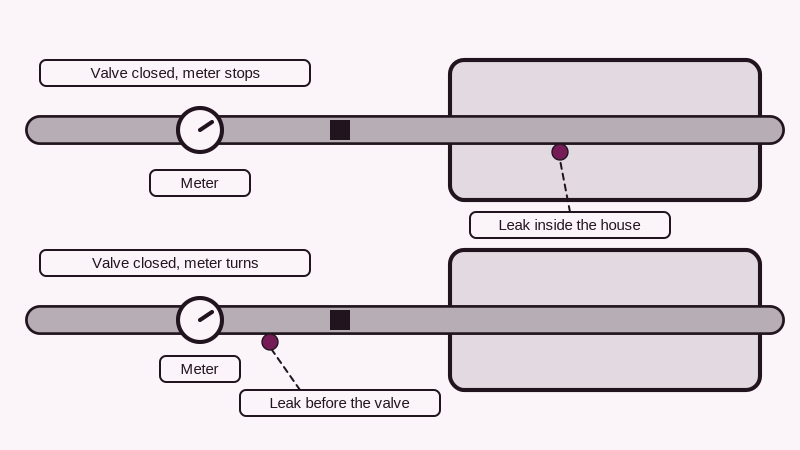
Begin with a meter test: shut the main and observe the dial. If it stops, the leak is on the house side. If it keeps turning, the leak lies between the meter and the shutoff, usually outdoors.
Detection is a service of its own. What leak detection costs shows how its quote should be laid out. For leaks under a floor, see slab leak repair company.
Can I fix a water pipe on my own, and what are the rules?
Some owners replace a short, accessible stretch of pipe or a fitting, but gas piping, main line work, permitted jobs and large repairs inside walls are for a contractor. Beyond a small dollar threshold, or whenever a permit applies, California demands a contractor license.
In the City of Los Angeles, permits come from LADBS, the Department of Building and Safety, whose Van Nuys office serves the Valley. Check with LADBS before going, because hours and rules change. Unpermitted work can cause trouble when a home is sold or a claim is made.
When you are unsure about the pipe material, the pressure or the shutoff, stop and ask a plumber. A leak you made worse can cost more than hiring a professional at the start.
At what point does a leak count as a burst pipe?
It is a burst once water flows steadily or sprays, the pipe has split lengthwise or a joint has come apart. Bursts flood fast and damage ceilings, floors and wiring. Close the main water valve right away, then read on for the next steps.
The guides to burst pipes and the first hour and why pipes burst cover causes and immediate steps. For urgent cases, the urgent burst pipe plumber page sets out what an urgent visit should include.
When water reaches electrical panels or outlets, keep out of that room, and cut power only if the breaker can be reached safely. Mixing water and electricity is dangerous, so leave the rest to a professional.
Which permanent repair suits each pipe material?
A lasting repair swaps out the damaged section. Copper gets a new length joined by push-fit couplings or soldered fittings. PEX is cut and joined with a crimp or expansion fitting. CPVC and PVC are cut and glued with the matching cement. Patching part of a galvanized steel run is difficult, so many plumbers recommend replacing the entire run.
Push-fit couplings are the beginner-friendly choice on copper, since they need no torch, but they cost more per joint and many plumbers avoid them inside walls where nobody can see a failure. Soldering requires a torch, fire safety and practice.
Pinhole leaks in copper are covered separately in repairing a copper pipe pinhole. With steel pipe, see galvanized pipe replacement before paying for patch after patch.
How can I patch a leaking water pipe for now?
For a short while, a repair clamp, a rubber patch held by hose clamps, a slip-on coupler or epoxy putty can hold back a leak until a plumber arrives. Dry and clean the pipe, apply the clamp or putty exactly as the package directs and reopen the water slowly to check. Treat the patch as temporary.
A stopgap can mask a weak pipe. If the leak came from a split or heavy corrosion, the metal nearby is thin, and the next failure may sit only inches away. Never seal a clamp inside a wall and forget about it.
Wrap tape, which some stores sell as a plumber's repair tape, is an emergency measure only. Plastic pipe has its own options, laid out in the guide to sealing a plastic pipe leak.
What happens once I line up a plumber?
First comes a visit to locate the leak, then a written scope and quote, then the repair. The plumber should describe the method, say who restores the wall or floor afterward and when the supply will be interrupted. Ask for the arrival window, and mention anything you already tried.
Send the details through the quote form; a local plumbing business takes it from there and schedules a visit. Someone handles form requests during working days, 9am to 5pm. Attach photos of the leak, the meter and any water damage, so the plumber turns up with the right equipment.
Raise water damage with the plumber too. Wet drywall and insulation need drying, and the risk of hidden mold grows with time. On coverage, see whether insurance pays for a burst pipe.
Common questions
How much time does a leaking pipe repair need?
With the plumber on site, a fitting or a short accessible stretch takes about an hour. Work inside walls runs longer because of the drywall, and repairs beneath a slab take a day or more. A time estimate should come once the leak is located, along with the hours the water is off.
Which questions should I put to a plumber ahead of the repair?
Ask how the leak's source gets pinpointed, which repair method is planned, whether the quote covers patching and cleanup, the length of the water outage and the warranty. Ask for the contractor license number and confirm it with the state licensing board. Get the scope in writing.
Do I have to be home during the repair?
Someone over 18 ought to be home to open the door, point out the fault and agree the plan. The water goes off for part of the visit. Clear space around the pipe and secure pets. You need not watch each step, but stay reachable and check the result when the work ends.
Can a leaking pipe stop leaking by itself?
No. Cold weather or mineral deposits can ease a pinhole leak for a time, but the pipe is still failing and the drip usually returns, often bigger. Repair it early, and keep watching the meter and the area for signs that water is still escaping.