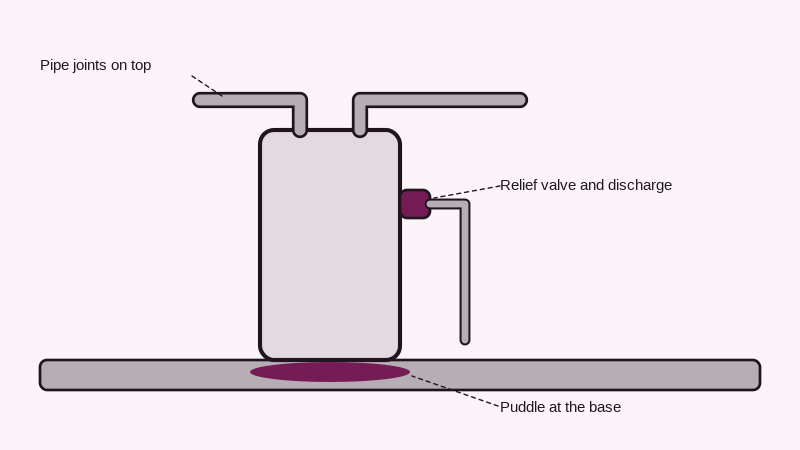
Puddles around a heater usually come from one of three places: a seeping joint in the pipework overhead, the pressure relief valve or the pipe that carries its discharge, or the steel tank itself. A joint or a valve is usually repairable. Water weeping through the tank wall means rust has gone all the way through, and that heater is finished. For the bigger picture, read the water heater repair page; Mission Point Plumbing can send a plumber to say which of the three you have.
Can I keep showering while the heater leaks?
Often yes, provided nobody smells gas, no water touches electrical parts, and the hot supply still works. Even so, holding off on hot water until someone looks is the cautious route, because a leak can get worse overnight and a heater sitting in a puddle is a hazard. Should you smell gas, step outdoors first and then report it to SoCalGas at 1-800-427-2200.
To shut it down, close the valve on the cold pipe feeding the tank from above. Electric models: switch the breaker off. Gas models: set the control dial to off as its label shows. Place a bucket beneath the drip, mop up, and photograph the leak for whoever visits.
Stay clear of wet wiring. If water has got into a socket or the electrical panel, step back and cut power only if you can reach the switch without standing in water.
Will a leaking water heater explode?
Rarely, and no source offers a countdown. Every tank heater has a combined temperature and pressure relief valve for exactly this reason. Risk climbs when that valve is blocked, capped or stuck while the burner or element keeps working. Read a leak as a prompt to act within a day, not as a ticking clock.
Danger signs:
- A relief valve that dribbles all the time, or a drain pipe someone has plugged
- Rumbling or popping coming from within the tank
- Rust-tinted water from the hot tap
- Soot or scorching at the foot of a gas unit
Any one of them justifies shutting down and booking a visit. The part is covered in relief valve replacement.
Is a leaking heater fixable?
Sometimes. Seepage at the pipe connections, the drain tap or the relief valve is frequently a part swap, with the tank staying. A leak at the tank's seam or underside cannot be patched safely, since the steel itself has gone. A plumber can usually find where the water starts within minutes.
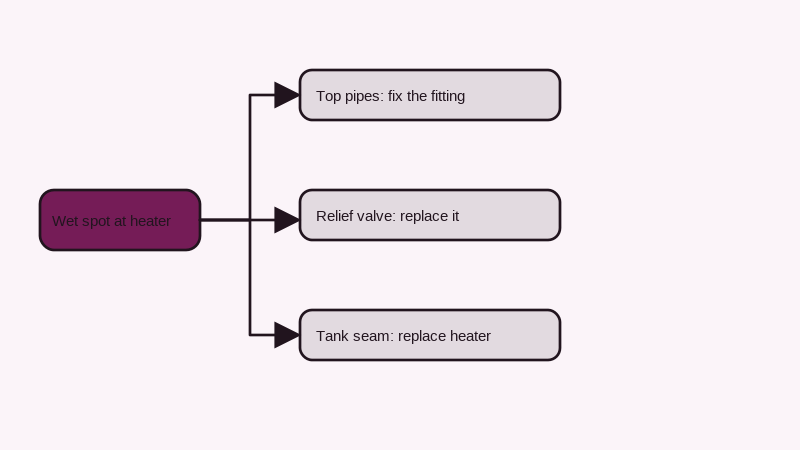
| Where it is wet | What it usually points to |
|---|---|
| Around the pipes on top | A joint that has worked loose or corroded |
| Beside the relief valve | A tired valve, or water pressure running high |
| Down low by the drain tap | A seeping tap |
| Soaking the floor beneath | A failed tank |
An older unit with a fixable leak may still be a hint to budget for a swap. Checks you can run are in handling a leaking water heater, and replacing the heater describes a new installation.
Do I need a permit to swap out a water heater?
In California the answer is generally yes, and addresses in the City of Los Angeles deal with the Department of Building and Safety, which has a Valley branch in Van Nuys. This page did not confirm fees or the online process, so check with LADBS before anything else. Have the plumber state in writing who pulls the permit. Gas connections count as regulated work.
The state also expects a contractor holding the right license classification once a job crosses a set dollar line, and any job needing a permit counts too. The licensing board offers a free online lookup, handy before you agree to anything.
Topics a replacement normally has to settle:
- Discharge piping on the relief valve
- Venting and combustion air for gas units
- Bracing against earthquakes, relevant in a seismic zone such as the north Valley
- Shutoffs and, commonly, an expansion tank
- Gas pipe size and the type of connector
What does switching to tankless involve?
An on-demand heater gets rid of the tank that can leak, yet it asks more of the house. Gas versions need proper gas piping and a route for the vent, and condensing models need a place to drain their acidic condensate as well. The maker's installation manual, Rinnai's for instance, spells out what the installer must follow.
Questions that shape the job: is the gas line big enough for the load, which wall or roof carries the exhaust out, and are a drain and an outlet close by? One brand is examined in Rinnai tankless installation, and tank versus tankless helps with the decision.
On regulation: the regional air board voted on June 6, 2025 not to approve its proposed changes to the water heater rules, so the existing rules stay in force and no new zero-emission requirement is pending from that vote.
What if the heater leaks and hot water has stopped as well?
A heater that has lost its water may have tripped a safety, or an electric element may have burned out from running dry. Do not power an electric unit back up until the tank is full. Several quick checks are listed in heater running yet no hot water.
Common questions
How much time does a leaking heater repair need?
A part swap is normally one short visit if the part is already on the truck. A full heater replacement takes most of a morning or afternoon: the old tank is emptied and hauled off, then the new one is connected and tested. The written quote should name a time window.
What do I ask the plumber about a leaking heater?
Find out whether the leak is repairable and how they know, who takes care of the permit, and what the price includes: haul-away, valves, bracing, expansion tank. Check the contractor classification in the state lookup. Keep their findings on paper in case you want a second opinion.
Is a leaking water heater an emergency?
Urgent, yes, though seldom life-threatening. Close the water and the fuel, contain the spill, and arrange a visit. A smell of gas, water near wiring or loud banging changes that: go outside and reach 911 if there is danger. The page on emergency plumbing explains how urgent requests work.
Will home insurance pay for a heater leak?
It may pay for water damage from a sudden leak, though usually not for the heater itself, and slow corrosion leaks are often excluded. Read the policy, hold on to photos along with the plumber's notes, and ask your insurer. What a particular policy pays is outside what we can say.
Can I repair the leak myself?
An owner can snug an accessible fitting after closing water, power and gas. Swapping a relief valve or the entire heater means gas, permits and scalding risk, so that goes to a contractor. After any fix, look again an hour later for fresh drips and wipe the area dry to be sure.