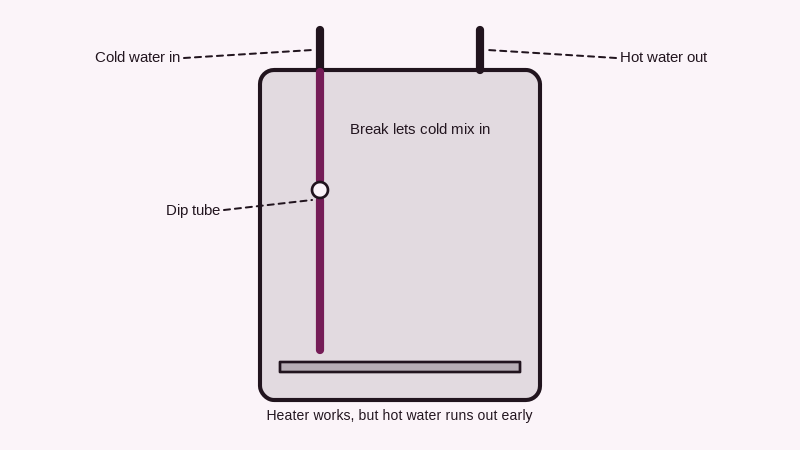
A plastic pipe inside the tank, the dip tube, delivers incoming cold water to the bottom so it heats from below while hot water exits from the top. When the tube cracks or snaps, cold water blends with hot near the top and showers go lukewarm fast. Fixing it is usually a modest repair. It is part of the wider guide to water heater repair, and the Mission Point Plumbing home page lists the rest of our work.
What is a dip tube for, and how do I spot a failure?
The dip tube keeps cold inlet water at the lower end of the tank, away from the hot water drawn off the top. Once it fails, cold water enters near the top, so the tap delivers a mixture. Symptoms include lukewarm water, a hot supply that dies quickly and tiny white plastic flakes in faucet aerators.
The tank is not damaged in this case, and the heater is heating normally. That distinguishes a broken dip tube from a failed element or thermostat. If water drawn from the drain valve feels hot but the tap runs lukewarm, the dip tube is a strong suspect. A plumber confirms by inspecting the tube through the cold inlet fitting.
Plastic tubes can become brittle from age and heat and crumble into flakes, which may clog aerators, showerheads and appliance screens. No manufacturer notice has been checked for this page, so treat it as general background and not a reason to assume yours is faulty. A broken tube can occur on any heater.
More clues to weigh:
- Shower water fades from hot to lukewarm after a few minutes rather than turning abruptly cold.
- Tiny white or off-white specks collect in the screens of faucets, showerheads or washing machine hoses.
- The heater is fairly new or middle-aged, yet the trouble began suddenly.
- The temperature setting looks right and the pilot or burner behaves normally.
Before settling on the dip tube, eliminate the usual alternatives. A dead lower element on an electric tank also gives a short hot supply. A thermostat set too low means lukewarm water all the time. Sediment can cut capacity. The no hot water page helps separate them, and replacement water heater elements covers the element case.
How is the tube swapped out?
The plumber turns off the power or gas and the cold supply, drains some water, unscrews the cold inlet fitting, extracts the old tube and inserts a new one of the right length and type. The fitting goes back on, the tank refills and the heater restarts. When the fittings are not seized, the job is generally fast.
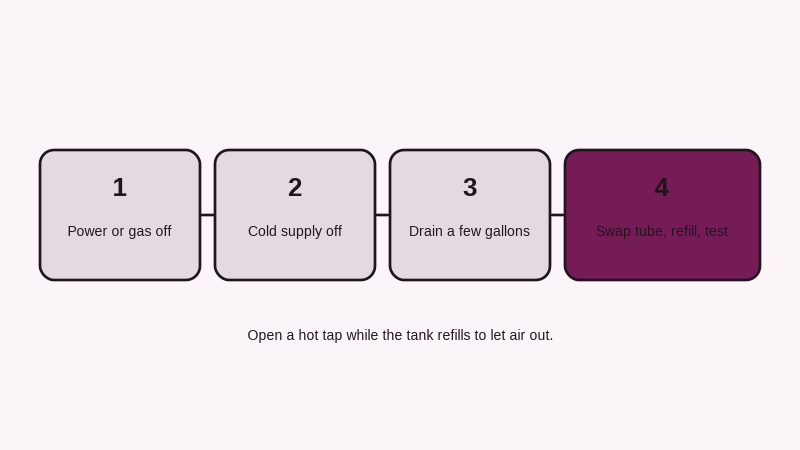
The sequence, in more detail:
- Cut power or gas. For an electric tank, flip the breaker. For a gas tank, set the control to pilot or off.
- Stop the cold supply. Shut the valve on the cold line above the heater.
- Release pressure and drain. Open a hot tap elsewhere and let a few gallons out of the tank so the level drops below the inlet.
- Detach the cold inlet. Many heaters have a nipple or heat trap fitting where the tube sits. Corroded fittings can resist, and forcing them may damage the tank threads.
- Extract the old tube. It may come out in pieces.
- Install the new tube. It has to suit the heater model and length. One that is too long or too short will not work properly.
- Reconnect, refill and test. Leave a hot tap open as the tank fills to bleed out air, then restore power or gas and look for leaks.
Compared with gas piping this repair is not especially dangerous, but it involves live power or gas, hot water, and fittings that can snap on an old tank. If the unit is old or the fittings are rusted, a plumber can judge whether repair is worthwhile. A heater nearing the end of its life may be better replaced, as the guide to how often water heaters need replacing explains.
If you tackle it yourself, cut power or gas first, put on gloves and eye protection, and stop if the fitting will not budge. Gas control and gas piping work belong to a contractor with the proper California license. Any repair needing a permit needs one here too.
When does a dip tube repair fall short?
A new tube cannot cure a leaking tank, heavy sediment, a failed element or a worn burner. If the heater is old, the tank is corroded, the fittings are seized or several faults exist, replacing the heater may be better value. A plumber can say which applies and write up both options in a quote.
Sediment is common in tanks that have never been flushed, and the water here comes from a changing blend of sources that varies by street. Your supplier's annual report lists what the water contains. Sediment settles over the element and insulates it, which also causes rumbling. Our guide to anode rods covers another part that protects the tank from corrosion, often checked during the same visit.
For a hillside home or a garage heater with tight access, say so in the request, since access changes the time on site. Also mention an attic or platform location, because the plumber may need extra equipment.
When you compare quotes, ask each plumber whether the dip tube price covers the new tube, any new fittings and labor, and whether it includes draining and refilling the tank. Our overview of what water heater replacement costs shows how to read an itemized quote, without quoting figures.
Send the heater's model, the age on its plate and the symptoms through the quote form.
Common questions
How long does the dip tube job take?
Typically one to two hours for a plumber who has the right tube, covering draining, replacing and testing. Seized or corroded fittings add time, and a second visit may be needed if the correct tube must be ordered. The quote carries the plumber's estimate, and hot water is off for part of the visit.
What should I ask a plumber before a dip tube job?
Ask if the quote is written and itemized, whether the plumber has confirmed the dip tube is the cause, what happens if the fittings fail, and whether the quote covers draining and refilling. A permit job requires a California contractor license, so ask for the number. Ask too whether old parts are removed.
Must an adult be home during the work?
Someone should be present at the beginning and the end, to show the heater and confirm that hot water has returned. The plumber needs access to the heater and shutoff valve and may switch off power or gas for a while. If you are out, a trusted adult can stand in once the plan is agreed in writing.
Is a dip tube a do-it-yourself repair?
In principle yes, for an electric heater or a gas one with safe access, as long as you shut off power or gas and water first. The danger is damaging old fittings or the tank threads. If the fittings are rusty, stop and ask a plumber. Gas piping is off limits for DIY; California expects a contractor with the proper license.
Does a fresh dip tube cure lukewarm water?
If the old tube was broken, yes, because cold water again goes to the bottom. If lukewarm water has another source, such as a failed element, a low thermostat setting or heavy sediment, a new tube will not help. A plumber can test which applies before replacing anything.