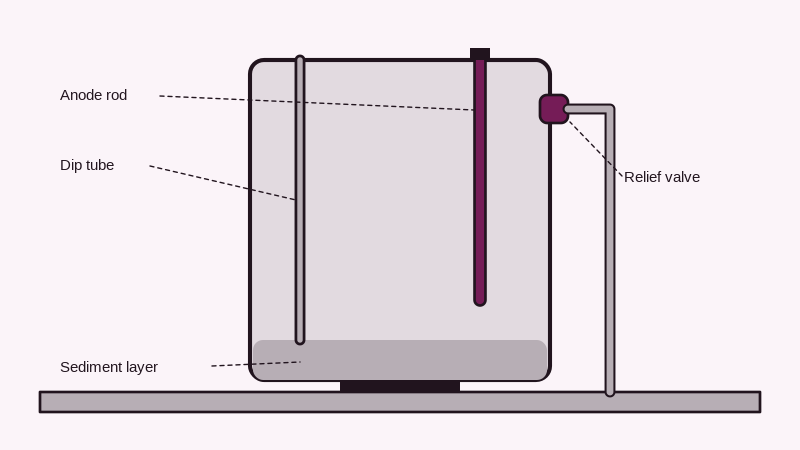
A storage tank heater typically serves for about ten years, sometimes a few more with good care, and tankless models are generally expected to outlast that. Published figures differ between makers and sources, so treat any number as a planning guide, not a deadline. The real answer depends on your water hardness, whether the tank gets flushed and whether the sacrificial anode rod was ever renewed.
If symptoms are already showing, begin with the overview on water heater repair and replacement. This page answers the planning question: when to expect a replacement, what to inspect each year, and what a late replacement costs a house with no spare hot water.
What is a tank water heater's usual lifespan?
A tank heater keeps going until its steel shell rusts through, typically after about ten years, a little more or less depending on the water and the care it gets. In hard water areas, heaters collect sediment and scale and tend to fail sooner. A unit that was flushed and given a fresh anode rod will often outlast a neglected one.
Find the rating plate on the tank's flank. Most have a serial number encoding when the unit was made, month and year, which the maker's website or a plumber can decode. In many north Valley tract homes from the 1950s to 1970s, the heater has already been replaced once or twice, so it may not be the original. Ask whoever sold you the house, or go through the paperwork.
Gas heaters have another wear point: the burner assembly, thermocouple and gas control valve. They can fail well before the tank does, and often a plumber can swap them out. Read the page on what to do about missing hot water before declaring the whole heater dead.
How long does a tankless water heater last?
Tankless heaters generally outlast tank units, because they hold no standing water to rust through a shell and many parts can be replaced one by one. Makers describe long service lives but assume regular flushing to clear scale from the heat exchanger. In hard water, a tankless unit that was never descaled may lose output long before it breaks.
Yearly service is the key. A plumber isolates the unit with its service valves, circulates descaling solution via the heat exchanger and cleans the inlet screen. If your unit has no isolation valves, ask for them during the following visit, because they simplify every later job. If your sinks are crusted white, see the guide to removing hard water scale.
When does the anode rod need changing?
Inside the tank hangs a metal anode rod, designed to corrode first so the tank steel survives. Many plumbers suggest inspecting it every few years, since it wears faster in aggressive or softened water. When it is mostly gone, the tank starts to corrode instead. Replacing the rod costs little next to a new heater.
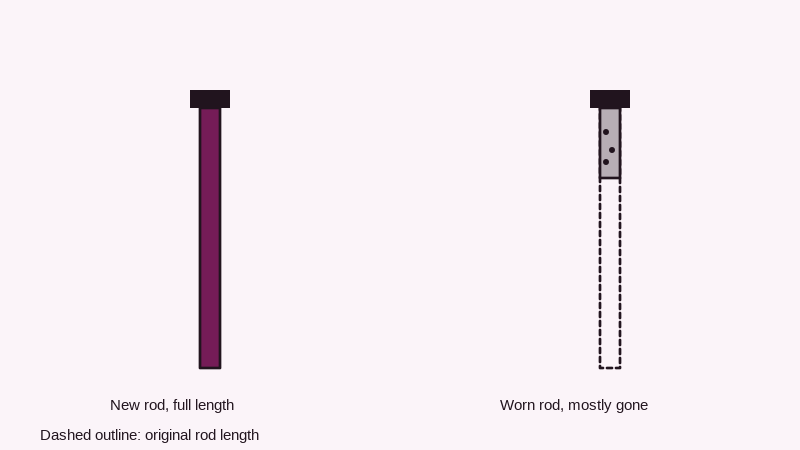
The page on anode rod replacement explains how the job goes and when it is not worth doing. Keep in mind that an old, rusted tank may hold a rod seized in place, and forcing it can damage the fittings. If the rod will not move, the plumber might recommend leaving it in place and planning a replacement.
A word on softeners: softened water can wear anode rods faster, so check the rod more often if you own one. Ask whoever installed the softener.
Which warning signs say a heater is finished?
Watch for rust-colored hot water, rumbling or popping caused by sediment, a puddle at the base, a heater that cannot keep up, and repairs repeating every few months. The strongest warning is water around the bottom of the tank. A leak through the tank body cannot be mended; replacement is the only fix.
Walk through this list once a year:
- Inspect the base and floor for damp, rust or staining.
- Listen for knocking or a rumble while it heats.
- Check the relief valve's discharge pipe for drips.
- Notice whether hot water runs out sooner than it used to.
- Look for green corrosion on pipes near the connections.
If you find water at the base, shut the cold water to the heater, switch it off and see dealing with a leaking water heater. Should gas be in the air, exit the building and use 911 from outdoors.
Should I swap the heater before it fails?
Replacing early gives up a little remaining life but spares you a flooded garage or a week of cold showers. A planned swap lets you compare quotes, choose a type and set a day. An emergency swap means taking whatever is in stock. If your heater is older than most sources cite and shows any warning sign, request a quote now.
A heater sitting in a garage, or in a closet fitted with a floor drain, turns a failure into a nuisance. One in an attic, an upstairs closet or over finished space can cause serious water damage, which strengthens the case for early replacement. Tenants should tell the landlord about warning signs rather than wait for a breakdown.
For cost, see the factors behind water heater replacement pricing. A planned job also lets you ask about related parts, such as an expansion tank, covered on the page about expansion tank replacement, and a new relief valve, covered under relief valve replacement.
Is a different permit needed for a new heater?
Swapping a gas water heater touches gas piping, venting and a relief valve discharge, so check with LADBS, the city building department, to learn if the job requires a permit. Where it does, a contractor who holds a California license must take it on. The city's exact rule has not been confirmed here, so ask the plumber on your quote who handles any permit.
There is good reason for gas work and venting to be regulated: faulty venting can spill exhaust into the house. Never move or alter gas piping yourself, and never disable the relief valve or its discharge line.
Common questions
How do I find out how old my water heater is?
Check the serial number printed on the rating plate. Many makers encode year and month in the first digits, though formats differ, so look up the brand online or ask a plumber. If the plate is unreadable or painted over, look for a date on the gas control valve, and note signs of age such as rust on the top or connections.
Do water softeners shorten a heater's life?
Softened water can use up anode rods faster, so a home with a softener needs the rod inspected more frequently. Scale-free water is gentler on heating surfaces, which helps. Both effects are real, and the net result depends on your water and upkeep. Have a plumber examine the rod.
What do I ask a contractor before a water heater replacement?
Get the make, model, size and warranty in writing. Find out what the connections, venting, relief valve and disposal include, who handles any permit, and whether the contractor has a California license, which the state board's site lets you check. Ask when payment is due.
How long is the replacement visit?
A straightforward tank swap often fills half a day. Tankless installs and jobs needing new venting or gas piping take longer. The plumber should name a window when booking and tell you how long the hot water stays off. Ask for that window in writing so the day can be planned around it.
Is anyone required at home while the heater is replaced?
Yes, have an adult on hand to point out the shutoffs, approve any change to the written quote and accept the finished work. You need not watch every step. Before the visit, make a clear path to the heater, and tell the plumber about parking and any locked gate.
For a quote, send a request, or go back to Mission Point Plumbing for the other services arranged through this site.