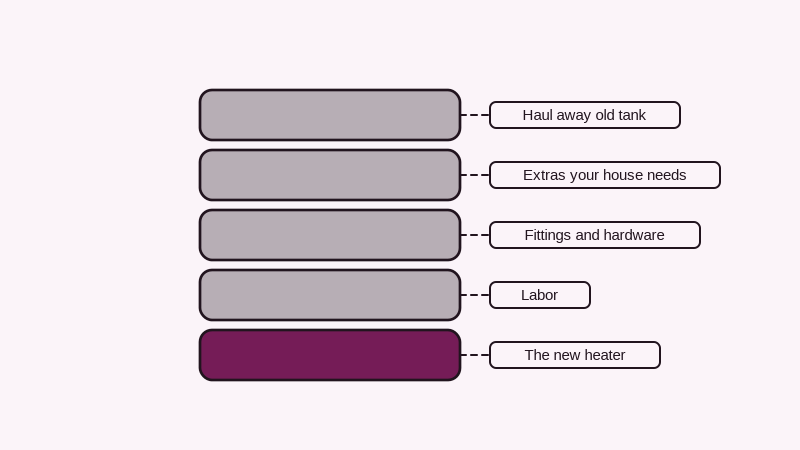
Think of a replacement quote as five stacked layers: the tank, the hours, the fittings, the extras your house needs to satisfy the rules, and haul-away of the old unit. Fuel, location and the layout of nearby pipework affect the total more than anything else. Each layer gets its turn below, as part of our water heater repair guides.
What layers make up a 50-gallon replacement quote?
Expect lines for the heater, labor, connection hardware, extras required by rules or site conditions, and disposal of the old tank. The heater price swings with fuel, brand, efficiency and warranty length. Labor follows how awkward the swap is. Hardware covers flex lines, valves and venting. Extras might be strapping, an expansion tank or a drain pan under the tank.
Insist that the quote names a make and model. "Fifty gallon" alone covers a wide spread of build quality. The warranty is part of what you buy, and so is the efficiency rating; a bargain tank with a short warranty can cost more by year ten, unless you plan to sell soon.
Then see how labor is described. A like-for-like swap in an open garage is brisk. A tight hall closet, a vent needing rework, or a unit in an attic lengthens the visit and raises risk. A tank that has been weeping may also have damaged the floor under it.
Beware a total with no breakdown. Quotes that omit strapping, permits or haul-away look low until add-ons arrive.
What details belong in a replacement request?
Give the fuel type, the age and make of the tank, where it sits and whether it leaks. A photo of the rating label and the area around it saves a round of questions. Add these to the request a quote form and a nearby plumbing business follows up with questions or a visit.
How a job runs lays out the stages, and the plumber for water heater replacement page describes the work itself. New here? Mission Point Plumbing is the starting page.
If the heater has died or water is pooling, say so. Requests are read on weekdays from 9am to 5pm, so for a flooding tank shut its water supply, and its gas or power, before anything else.
How do I fairly compare two quotes for the same heater?
Set them side by side, layer by layer. Both should name the same make, model, size and fuel, give warranty terms, show labor, list the hardware, say whether strapping, an expansion tank, a drain pan and permits are included, and explain what happens to the old tank. Wherever one quote says nothing, extra charges tend to appear later.
Ask who applies for the permit, if one is needed, and how the final inspection works. California makes a contractor license mandatory on larger jobs and on anything needing a permit, so get the number and check it on the state contractors board site.
Raise timing too. Same-day swaps are often possible when the model is on the shelf, though not always, and a long wait for a particular unit should be stated at the start. Do not accept vague warranty promises.
For background, water heater replacement costs and hot water heater replacement describe how pricing is structured, and how long heaters last helps with repair-or-replace decisions.
Does gas versus electric really move the price?
Heavily. A gas tank needs a gas line, a flue and combustion air; an electric one needs a proper circuit and breaker. Switching between the two means adding or removing lines, vents or wiring, which may need permits. Keeping the same fuel is the simpler path and usually the smaller invoice.
A gas-to-gas job goes like this: old tank out, new tank in, line and flue reconnected, joints tested. Gas piping is work for a contractor with a California license, and a leak test is part of doing it properly. If you smell gas at any point, go outside, reach SoCalGas on 1-800-427-2200 from there, and use 911 if danger is present.
Electric to electric is tidier but depends on the circuit. An undersized or aged one may need attention first. A heat pump water heater changes the picture again, with a bigger footprint and a condensate drain, so request that option on its own line instead of blended into one number.
A tankless unit is a different category, covered in tank versus tankless and tankless replacement costs.
Which local conditions add to the bill in the north Valley?
Three things: access, the age of the house and earthquake rules. Tract homes from the 1950s to the 1970s often have the heater in a garage or hall closet, with older shutoffs, vents and supply lines close by that may need replacing. Under California law water heaters must be braced against earthquakes, so strapping belongs in every proper install.
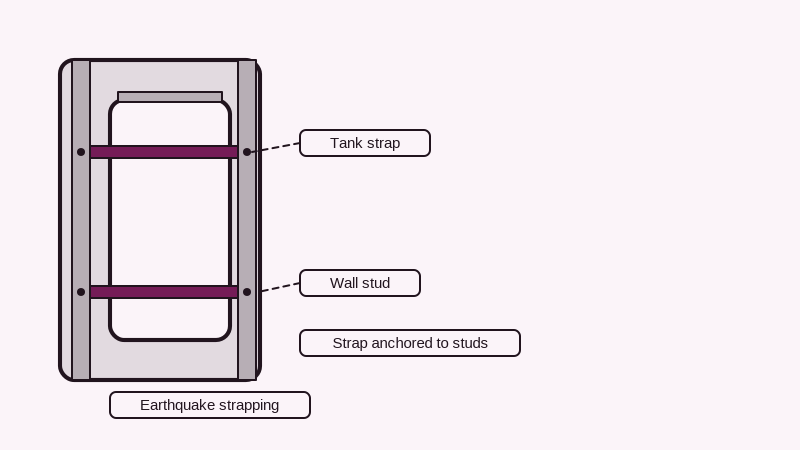
Local history explains why. The 1971 San Fernando earthquake left Sylmar residents without water and gas, and the 1994 Northridge quake started fires that burned over 70 homes. A strapped tank and a plan for the gas shutoff matter here. The page on earthquake gas shutoff valves covers what the City of Los Angeles requires at sale and on larger jobs.
Pressure and water chemistry matter too. Excess supply pressure shortens tank life, and a closed system may need an expansion tank, which expansion tank replacement explains. Heated hard water, per the USGS, leaves deposits, so sediment can age a tank early.
Permit practice depends on the address. Inside the City of Los Angeles the office is the Department of Building and Safety, and the plumber should tell you what applies instead of leaving you to find out.
Common questions
Is half a day enough for a 50-gallon swap?
Often, for a same-fuel replacement when the plumber arrives with the unit. Fuel changes, venting rework, inspections and tight access stretch it. Ask for a time estimate, and confirm the model is in stock, because waiting on a special order delays everything.
Does 50 gallons suit most households?
It fits many, not all. The right size depends on how many people live in the house, how much hot water runs at once, and how quickly the heater recovers. The label on your present tank shows what you have, and a plumber can advise on a change.
Does a water heater swap need a permit?
Often, though the answer depends on the address and the type of work. In the City of Los Angeles, permits come through the Department of Building and Safety. Ask the plumber who handles it, and confirm with the city instead of assuming it is covered.
Is it fine to supply my own heater?
Sometimes, but responsibility for fit and warranty then falls on you, and some plumbers decline to stand behind work on equipment they did not supply. Ask first. If you buy, match fuel, size and vent type exactly, and keep the receipt and manual together.