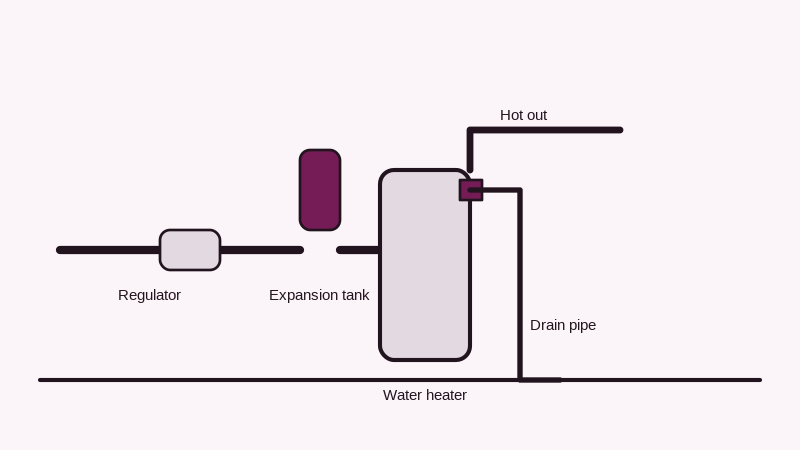
Look for a compact pressurized vessel, often painted blue or red, bolted onto the cold water pipe close to the water heater. It takes in the added volume that water gains when heated, so house pressure does not spike. When it fails, the heater's relief valve may weep and fixtures may hammer. Water heater repair gives the wider picture, and you can start a request in the quote form.
Why does a water heater have an expansion tank?
Heating makes water expand. When a regulator, or a backflow device that blocks reverse flow to the street, seals off the plumbing, that surplus has nowhere to go. Inside the tank, a rubber diaphragm and a cushion of air absorb it. If none is fitted, pressure climbs on every heating cycle.
Whenever the burner or element fires, additional volume is forced into a sealed system, because hot water occupies more space. The surge strains the heater tank, its connections, fixtures and appliance valves. The relief valve may open to vent it, which appears as a drip. A sealed system frequently needs an expansion tank, but this page cites no specific code rule, so ask the plumber what governs your house.
In houses from the 1950s to the 1970s, a regulator or backflow valve may have been added later, quietly converting an open system into a sealed one. If yours has a pressure regulator, inspect the expansion tank. Water pressure regulator explains how the two relate.
How can I tell if an expansion tank has failed?
Typical signs are a weeping relief valve, pressure surging once the water heats, knocking pipes, and a tank that seems full of water rather than air. Rap on it: the upper part should ring hollow and the lower part sound heavier. If both sound solid, the air cushion has gone and the tank is waterlogged.
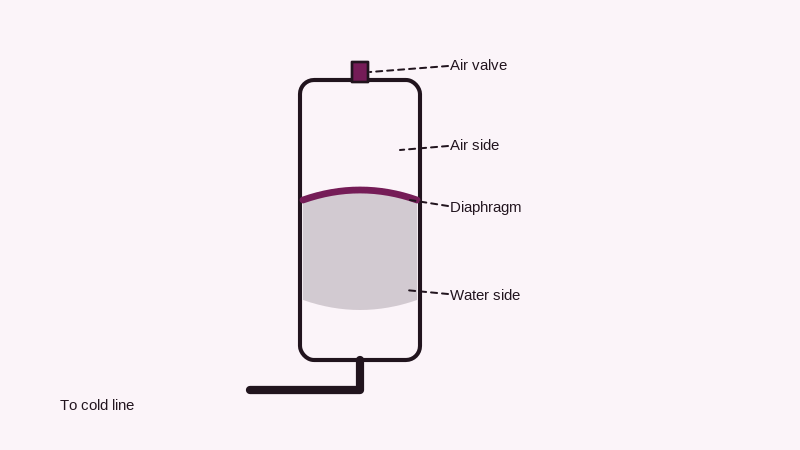
How to test:
- Turn off power or fuel to the heater, then shut the cold supply valve that feeds it.
- Open a hot tap to bleed off pressure.
- Locate the small air valve on the tank, resembling a tire valve.
- Press the pin briefly. Air should hiss out. Water means the diaphragm has ruptured.
- When air comes out, read the pressure with a tire gauge and compare it with house pressure.
A tank that seeps from the body, shows a rusted shell or bulges needs replacing. One that merely lost air may be topped up, but most are swapped once the diaphragm fails. Dripping relief valves and water hammer cover related symptoms.
Why is the relief valve on my water heater dripping?
Possible reasons include a worn valve, house pressure that is too high, thermal expansion with no outlet, or overly hot water. Never cap the valve. It exists for safety, and plugging it is dangerous. Measure pressure and look at the expansion tank before replacing the valve itself.
Causes, ranked by how often plumbers investigate them:
- a waterlogged or absent expansion tank
- high incoming pressure, possibly from a regulator fault
- a worn valve seat or mineral deposits on the valve
- a thermostat set too high
If the dripping happens just during a heating cycle, expansion is the likely cause. A constant drip suggests high pressure or a worn valve. A related page covers leaking heaters and who fixes them.
What happens when an expansion tank is swapped out?
The order of work: the plumber turns off the energy source, shuts the cold water, bleeds a little from the line, removes the old tank by unthreading it, screws on a correctly sized replacement, sets the air precharge to match house pressure and checks for leaks. The work is brief, though gas and permit questions can add time.
Points worth knowing:
- Size: chosen by heater capacity and pressure. Bigger heaters generally need bigger tanks.
- Position: on the cold supply near the heater, supported so its weight does not hang from the pipe. Many mount vertically or rest in a strap.
- Precharge: the tank's air pressure should equal house pressure at installation. A wrong precharge undermines performance.
- Fittings: a tee or flexible connector, plus a shutoff for easy service.
Replacing the heater itself raises further questions on venting, gas, seismic strapping and permits. Permits in the City of Los Angeles come from the Los Angeles Department of Building and Safety, and work that requires one must go to a California contractor.
Can I replace the expansion tank myself?
A handy owner can sometimes manage it on a cold line, since the tank threads onto a tee. Go carefully: switch the energy source off, close the cold supply and relieve pressure first. Stop and hire a plumber when the shutoff will not close, the pipe is corroded, or the heater brings up gas or venting concerns.
Two warnings. A tank full of water is heavy and strains old pipe, so support it. And on a gas heater, leave every gas connection and the vent alone, because a mistake with either is hazardous. If gas is ever noticed, exit the building at once and contact 911 or your gas utility from outdoors.
When house water pressure runs high, the tank only treats a symptom. Have a plumber check the regulator and consider pressure regulator replacement.
How do I arrange expansion tank work?
In the quote form, enter the heater type and age, what you have noticed (a drip, hammering, a rusted tank) and whether a regulator exists. Pictures of the heater, the tank and the pipes help. A nearby plumbing business answers with a written quote. Submissions are checked on weekdays from 9am to 5pm.
Expect the quote to give the tank size and brand, the precharge setting, whether pressure was measured and whether the relief valve and shutoff valves are checked during the same visit. California caps deposits on home work, generally at the lesser of a fixed amount or 10 percent of the contract, and requires a contractor license on jobs over a small threshold and on any permitted work. Look the license up through the CSLB site. If the heater is old, weigh the option of replacing the heater.
Common questions
Do I need an expansion tank on my water heater?
Often, when a regulator or backflow device closes the system, since the added volume has no outlet. Whether yours requires one depends on the setup. Before deciding, ask a plumber to measure pressure and examine the system as a whole, so the choice rests on measurements.
What is the lifespan of an expansion tank?
It varies with water quality, pressure and the tank's build. Many run for years, but the diaphragm can fail. Examine the tank if the relief valve drips or pipes hammer or pressure spikes, and look at it again whenever the heater is replaced.
Can a bad expansion tank cause low water pressure?
Usually the effect is the reverse, pressure spikes and a dripping valve, although a failed tank or a leak can hurt flow. If low pressure is your complaint, check the shutoffs, the regulator and the supply first. See sudden low water pressure.
Where is the expansion tank located?
It sits on the cold water line a short way from the heater, hanging from the pipe or propped from below, and has an air valve at one end. If you find none, your system may not have one, which is worth raising with a plumber.
What does it mean if water comes out of the air valve?
The rubber diaphragm inside has failed, leaving the tank waterlogged. A waterlogged tank no longer absorbs expansion and should be replaced. A plumber can confirm that, pick the size of the new one and inspect the rest of the system as well.
The rest of our guides start from the plumber guide for Sylmar.