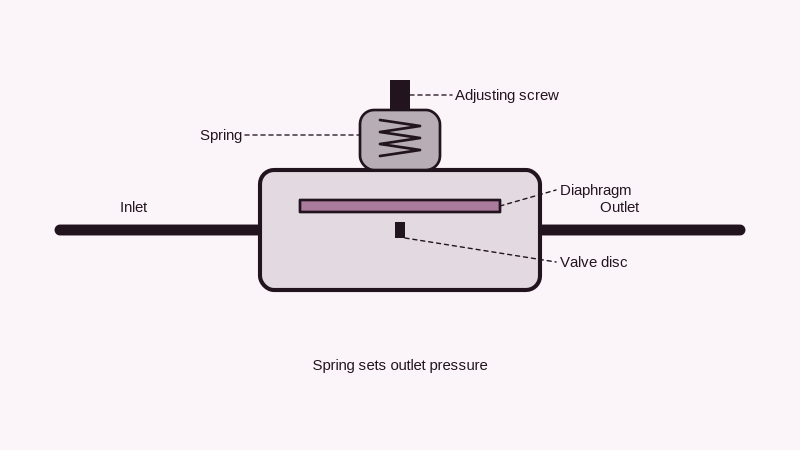
Picture a doorman for your plumbing. The regulator is a squat brass bell clamped onto the pipe where the supply comes in, and it lets street pressure through only at a gentler strength. Springs and rubber diaphragms inside wear out, after which pressure can creep upward or flow can choke. The wider topic lives under low water pressure; this page is about the valve.
Why does a house need a regulator?
Street pressure is set for the whole system, not for your fixtures. It rises and falls with terrain, nearby tanks and pumps, and demand, and hilly ground can push it high. A regulator lowers it and holds it steady, which spares supply lines, hoses, faucet seals and the water heater from a pounding. Not every house has one.
Sylmar climbs from the flat toward the foothills, with upper Sylmar's terraced streets standing several hundred feet above the lower blocks, so two neighbors can see quite different readings. LADWP serves these neighborhoods from a mixture of sources that varies. Whether your own address has a regulator depends on the house, which is why looking at the pipe beats assuming.
Where would you find it?
Follow the main shutoff. The regulator usually sits just downstream of it, often in the garage, along an outside wall, under the house, or inside a buried box near the meter. What you want is a brass dome about the size of a fist, topped by a screw and a locknut for adjusting it. If nothing like that is there, your house probably has no regulator.
Frequent hiding places:
- The garage, beside the water heater or along the front wall
- The crawl space under the floor
- A below-ground box by the street meter
- The side wall near a hose faucet
More locations, and tips for telling it apart from other valves, are on the page about finding the regulator.
What are the signs it is going bad?
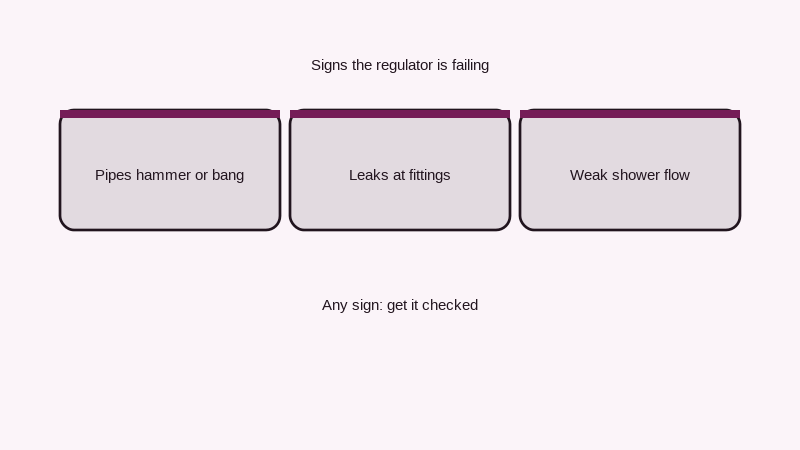
Clues include pipes that bang, toilets that run, faucets that drip, a heater relief valve that weeps, appliances that die early and pressure that swings. The deciding test is a pressure gauge screwed to an exterior hose faucet. A high resting number, or one that climbs while nothing is running, shows the valve is no longer holding the line.
How the gauge test goes:
- Shut every tap and appliance.
- Screw the gauge onto an exterior hose faucet.
- Open that faucet and record the resting number.
- Run a tap and watch the needle; a plunge toward zero hints at restriction.
- Shut the tap and check if the needle drifts upward.
Hammering has other causes too, discussed in water hammer sound.
Is adjusting it a homeowner job?
It can be, but it is easy to botch. The screw alters downstream pressure, and the right setting comes from the maker's range plus a gauge, not instinct. If the valve cannot keep a setting, it is worn out and should be replaced. Never turn the screw without a gauge attached.
Loosen the locknut, make a small turn, wait for the system to settle, read the gauge, then lock it again. Clockwise typically raises pressure, but the label rules. Move in tiny steps, because too low gives a feeble shower and too high strains everything downstream.
What happens during a replacement?
The plumber begins by shutting off the main and emptying the line, pulls out the worn unit and installs a replacement matched to the pipe size and connection type. Pressure is then set against a gauge and every joint is watched for leaks. An expansion tank often comes into the discussion too, because a regulator can close the house off and leave heated water with no room to expand.
A permit may apply. In Los Angeles, LADBS issues them, with a Valley branch in Van Nuys, and this page did not verify whether a swap needs one, so ask LADBS or the plumber. Regulators are wear items, often replaced after ten years or more, though the lifespan depends on the model and your water.
Have before and after readings written down. Price factors are in water pressure regulator cost, and sizing in the half-inch regulator.
At what point does a plumber become necessary?
Bring one in if the gauge reads high at rest, the valve leaks, it cannot hold a setting, or over-pressure damage has appeared, such as burst hoses or a dripping water heater. The valve is part of the main supply, so a fitting that fails mid-job can flood the area, another reason to hire the work out.
Houses built in the 1950s to the 1970s across the north Valley may still have worn original pipes and valves. Describe what you notice through the quote form; a nearby plumbing business picks it up and can take readings. The home page shows service areas.
Common questions
What is the usual duration of a regulator swap?
With an accessible main, plan on an hour or two at the house, plus time for testing and setting. Corroded fittings, tight access or an added expansion tank stretch it. The quote should state the window and when the water is off.
Which questions come first before a regulator job?
Request the readings before and after, the proposed model and size, a view on whether an expansion tank is advised, who files for the permit and what the price includes. Look up the contractor classification on the state board site and get the findings on paper, pressure numbers included.
What pressure should my house run at?
The target depends on the maker's range and your fixtures, and a plumber sets it by gauge. We give no figure, since none could be verified from an official source. Ask for the reading and the target range, and keep the numbers with your home records for later comparison.
Is a regulator the same thing as a booster?
No. A regulator brings down excess pressure, while a booster lifts pressure that is too low. They solve opposite problems, so learn which you need first. A gauge reading, taken in minutes at an outdoor faucet, settles it, and whether a booster deserves any thought is the plumber's call.
Must I be home while the work is done?
Yes, to show where the main shutoff is, describe the symptoms and approve the job, because the supply goes dark for a time. Renters should inform the landlord. At booking, mention gates, pets and parking, and note whether the main is in a locked garage or a buried box that needs digging out.