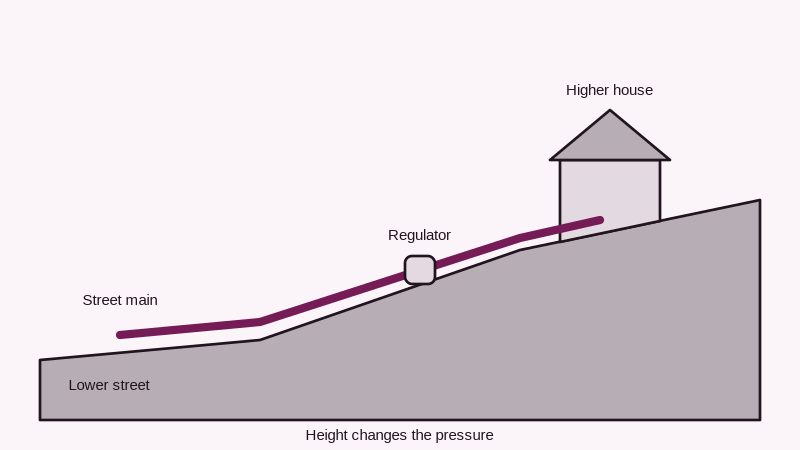
A water main pressure regulator is a spring-loaded valve installed on the supply line right where it enters the house. Street pressure can be high and can swing; the valve trims it to a steadier, lower level for the indoor plumbing. Without one, fixtures, supply hoses, the water heater and the washing machine face whatever the street sends. It is a small part with a big effect, and it belongs to the wider topic of low water pressure and valves.
Not every house has one, and some have one that has quietly stopped working. The quickest way to find out is a gauge reading.
Why does the main line need a regulator?
Street pressure is set for the whole neighborhood, allowing for hills, fire flow and demand, so it often exceeds what a house's pipes should carry. A regulator protects fixtures and appliances by holding house pressure at a steadier, lower level. Without it, high pressure wears valves, strains joints and can bring leaks and noise.
The Los Angeles Department of Water and Power serves the north Valley neighborhoods named in its water quality report, among them Sylmar, Granada Hills, Porter Ranch and Pacoima. Its system spans a lot of elevation, from the flat Valley floor up to the foothills, and a street's pressure depends on where it sits. Your bill names your water supplier, and the utility can tell you what pressure it delivers.
Fixtures show damage first: faucets drip, toilet fill valves hiss, washing machine hoses bulge and the water heater relief valve starts dripping. Our guide to what causes pipes to burst names pressure as one cause.
How do I check the water pressure at home?
Screw a pressure gauge onto an outdoor hose bib or a washing machine connection, close every tap and read the dial. Repeat at another time of day. Steady numbers are good. A reading that climbs overnight or wanders from hour to hour suggests a failing regulator. A plumber can read and interpret the result for your house.
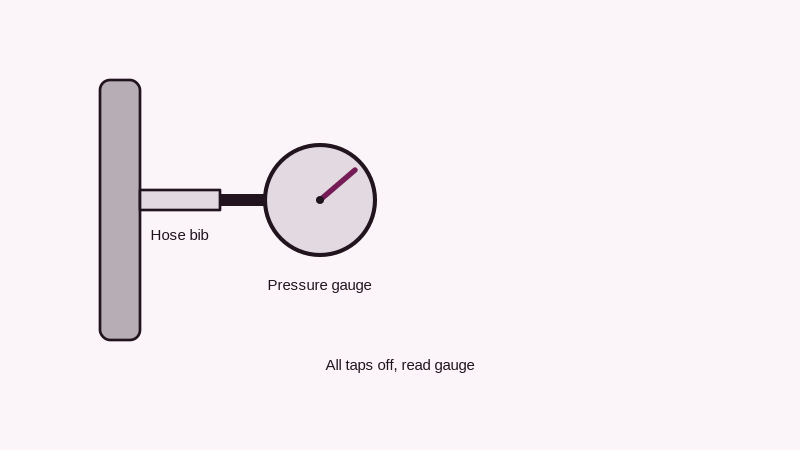
Gauges are inexpensive and sold at hardware stores. Take readings in the morning, when demand is high, and late at night, when it is low, and write them down. Do the same after any plumbing work. If the numbers jump, include them in your quote request.
No target number is quoted here, as the fixtures and appliances in your house carry their own ratings. Check the makers' documents and ask the plumber what the regulator should be set to for your house.
Can I adjust the regulator on my own?
Many regulators have an adjusting bolt: turning it in raises outlet pressure and turning it out lowers it, but work with a gauge attached, in small steps, with taps closed. A wrong setting may leave you with weak flow or damage. A unit that will not hold a setting should be replaced.
Loosen the locknut, turn a quarter, retighten and read the gauge again after a minute. If the dial does not respond, the unit is worn out. In an older home, never force a corroded fitting; leave it to a plumber. Permitted work must go to a contractor with a California license, so check with the Los Angeles Department of Building and Safety.
If pressure is simply too low even though the regulator is set properly, look elsewhere: a partly closed valve, corroded pipe, a clogged screen or a fault on the supply side. Our pages on replacing a regulator and a whole-house regulator cover the next steps.
Why might an expansion tank be needed once a regulator is fitted?
A regulator can behave like a one-way valve, so when the water heater warms the water and it expands, the pressure cannot escape and spikes. That may drip the relief valve or strain pipes. An expansion tank gives the swelling water somewhere to go. Plumbers commonly suggest one when a regulator is installed or replaced.
Your heater may already have one: look for a small tank near it with a tire-style air valve on top. Replace a waterlogged one. Our page on expansion tank replacement shows how the job goes. Older north Valley houses often lack one, as they predate routine use.
How does a main regulator differ from one at the heater or a fixture?
A main regulator governs everything inside the house. One on the water line to the heater, or a point-of-use regulator for a single appliance, controls just that branch. The main regulator is usually the right first step. See water line regulators and hot water regulators for branch versions.
Using a branch regulator to make up for a failed main one leaves other fixtures exposed. If your trouble is one fixture, such as a shower, a different part may be the answer.
According to the EPA, average household leaks can waste more than 9,300 gallons of water a year, and high pressure makes small leaks worse. A plumber who checks pressure early can head off a burst later; see burst pipe prevention.
Where is the main regulator, and how do I recognize it?
The usual spot is the supply pipe just past the main shutoff: in the garage, in a closet beside the water heater or in a box at the front of the lot. Look for a brass body shaped like a bell, with an adjusting bolt and locknut on top and arrows marking flow direction. Compare with the photos on our page on what a regulator looks like.
Follow the pipe from the meter or from its entry into the house, watching for a fitting wider than the pipe, with a bolt on top. A gauge port may be attached. In hillside homes, such as those on the upper Sylmar terraces, the regulator may be in a small outdoor box against the house wall.
Some builders put a regulator in the street box instead of the house. If you find none, ask the plumber, and read where regulators are usually located.
Common questions
How long does swapping a regulator take?
Often one to two hours if the unit is reachable and the fittings match. A buried box, corroded pipe or an added expansion tank takes longer. The plumber should offer a time window and say when the water will be off.
What do I ask a plumber before hiring?
Ask for the model, size, target pressure, fittings, permit handling and the warranty on parts and labor. Confirm the plumber has a California contractor license, which you can verify on the state board's website, and whether an expansion tank is part of the job.
Should an adult be home for a regulator job?
Yes, to point out the main shutoff and the regulator, approve the quote and see the pressure checked. Water goes off for part of the visit, so fill a pot or two in advance and tell everyone in the house.
Does the water utility maintain my regulator?
The utility owns the meter and the street side. The regulator inside the house or at the property line is usually the owner's. Check your account, and ask the utility if you are unsure which side a part is on.
Does low pressure always point to a bad regulator?
No. A closed valve, clogged fixtures, pipe corrosion or a utility issue can all be the cause. A gauge reading at an outdoor tap shows whether the whole house is affected. If one fixture alone is weak, look there first, and if every tap is weak, shutoff valves and the supply line come next.
The other jobs that can be arranged are listed back at Mission Point Plumbing.