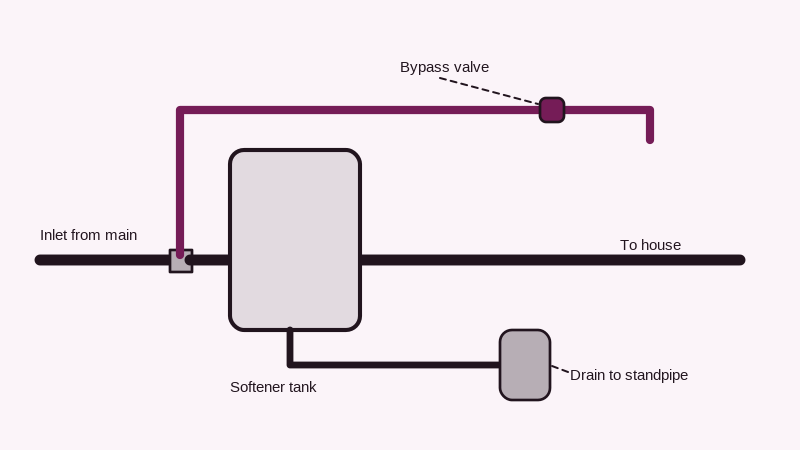
A softener install ties the unit into your cold water main, adds a bypass valve so water can skirt it, runs a drain line for regeneration waste and plugs into power. A local plumbing business sends a plumber to carry this out for the model you choose. Background sits on the water softener installation page, and you can begin a request at the quote form.
What does the installation work include?
The full job covers choosing the location, tapping the main past the shutoff, fitting a bypass, running a drain that keeps an air gap, arranging power, loading salt and programming the controller. Plenty of plumbers also test the water and confirm the hot and cold lines were not swapped.
The pieces, in typical order:
- Site and sizing: pick a spot near the main, a drain and an outlet, and size the unit to household headcount and water hardness.
- Connections: cut into the supply pipe and fit unions plus a bypass.
- Drain: run a hose or pipe to a laundry drain, floor drain or standpipe, leaving the air gap intact.
- Power and setup: plug in, then set the clock and the regeneration schedule.
- Test: look for leaks, flush the resin tank and confirm water flows through.
- Hose bibs: many installs leave outdoor taps on unsoftened water.
A good quote itemizes all of this. Prices are discussed under what a softener installation costs and, for the whole-house case, the whole-house softener price page.
Is a softener necessary for my home?
White scale on faucets, spotted glassware, crust in kettles and heaters, and weak soap lather all signal hard water, meaning lots of dissolved minerals. A softener removes them, but find out your actual hardness before you buy, since a simple water test tells you whether one is worth it.
Hardness depends on where the water comes from. LADWP's 2025 Drinking Water Quality Report says it supplies most of the north Valley from a changing blend of sources. Check LADWP's yearly report, or your own supplier's, for hardness, because water from mixed sources can differ in hardness between neighbouring streets. No number is given here since none was verified. Read stopping scale before it builds and removing scale already there.
Another question is whether a softener can push up your bill. See softeners and water bills.
What happens in a whole-house installation?
A whole-house job treats every drop entering at the main, usually inside the garage or a utility space where the line arrives. The plumber taps the line, mounts the unit, adds a bypass and a drain, and often leaves outdoor taps and irrigation untreated so salt stays away from plants.
Planning questions:
- Where does the main come in, and is there space for a tank and a salt bin?
- Are a drain and an outlet within reach?
- Is the water heater close, and should it be shielded from scale?
- Should irrigation and outdoor taps stay untreated?
- How many people and bathrooms will the unit serve?
Location needs thought in a hillside house in upper Sylmar, where the main may enter at a different level from the garage. Photos of the main, the water heater and the nearest drain let a plumber give a firm quote.
How do the drain line and air gap work?
Softener waste water has to reach an approved place, and the drain needs an air gap, a physical break that keeps waste from flowing back into the unit. The plumber chooses the connection point, such as a standpipe or laundry drain, and keeps the discharge away from the supply side.
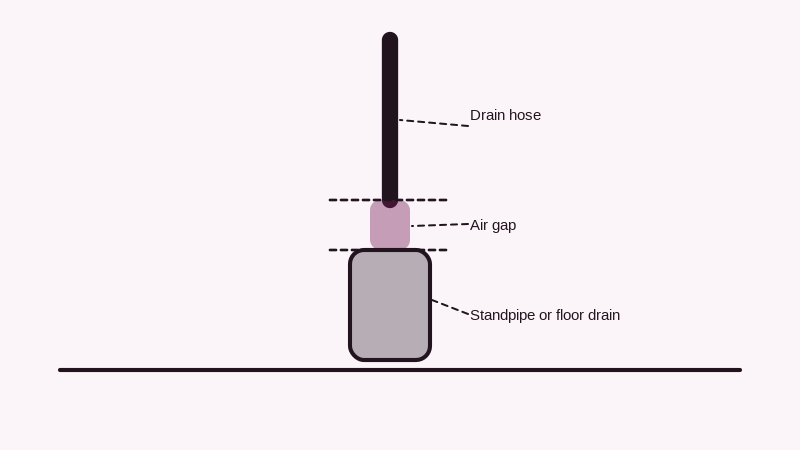
The gap is important because regeneration waste is salty and must never siphon backward. Ask the plumber to show where it is on your job. Some local agencies regulate softener discharge, so check whether any rule covers your address before installation. This page claims no specific rule.
Request a separate line in the written quote for the drain and air gap; that way you can see what it covers and set it against a second plumber's version.
Can I install it myself using the maker's manual?
Many softeners come with a manual covering plumbing, drain and controller, and a capable owner may be able to work from it. Tapping the main, soldering copper and wiring all carry risk, and permit-required work must go to a California contractor. One mistake can flood a house.
Brand manuals are not reproduced on this site. Whether the unit is a Whirlpool, an AquaSure, a Rheem or another make, the manufacturer's own manual covers that model, from controller settings to salt type and bypass. A plumber who works from it knows what the unit needs. Have the model and manual named in the written quote.
Should gas or electrical doubts come up, stop there. A gas smell means walking out of the building and reaching 911 or the gas utility from outside.
What applies to well water, commercial jobs and permits?
Well water often holds a different mix of minerals and may need testing before you choose a softener. Commercial units are larger and bring their own drain and permit demands. Permits for homes inside the City of Los Angeles come from the Los Angeles Department of Building and Safety, and the plumber should say whether yours needs one.
Most north Valley homes use city water, but a home on its own well should test for hardness, iron and other minerals before a softener is specified. California also generally expects a contractor license once a job passes a small dollar threshold, and for any permitted job. Look the contractor up on the CSLB website. Deposits on home improvement contracts are capped, generally at 10 percent of the price or a fixed sum, whichever is less.
How can I ask for an installation?
Complete the quote form with household size, bathroom count, whether a unit already exists and its make and model, where the main enters and photos of that area. Requests are looked at on weekdays, 9am to 5pm, and a nearby plumbing business answers with a written quote.
To see how a job unfolds, read the softener installation walkthrough. Mention if you wonder whether the unit will shield the water heater, a common reason people ask.
Common questions
Where does a water softener go?
Usually on the main line past the shutoff, inside the garage or a utility space, near a drain and an outlet. Some homes mount it outdoors under cover. The plumber picks a spot that satisfies the maker's requirements and keeps the unit reachable for salt refills and service.
How long does the installation last?
For a simple whole-home setup beside an easy-to-reach main, expect somewhere between a few hours and a full day, depending on the plumber and the unit. Moving a drain, adding an outlet or opening walls stretches that. Ask the plumber at what time the water goes off and how long it stays off.
Does a softener need a drain?
Yes. Regeneration creates waste water that has to reach a drain, which should include an air gap to prevent backflow. A laundry standpipe or floor drain is usual. If none is nearby, the plumber may need to add one during the installation visit.
Does softened water reach my irrigation and outdoor taps?
Many installers keep outdoor taps and irrigation on unsoftened water, since softened water carries extra sodium and is poor for plants and lawns. Have the plumber branch the outdoor lines off before the softener, and get that arrangement in writing on the quote before work begins.
Do I need a permit to put in a softener?
It depends on the scope and the address. In the City of Los Angeles the office that handles permits is the Department of Building and Safety. Ask the plumber to name any permit that applies, who files it and who is on site for the inspection.
For the wider picture, start with Sylmar plumber.