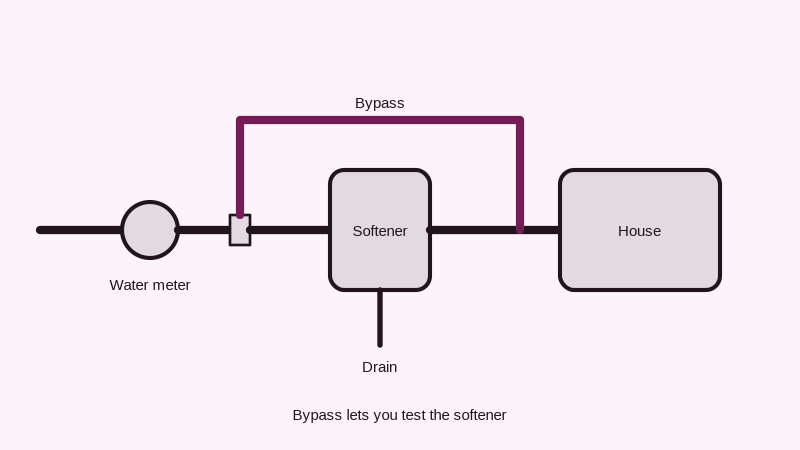
Yes, a softener can add to a water bill, but only slightly when it works as designed. Each cleaning cycle, called regeneration, sends a measured amount of water through the resin and down the drain. A softener stuck mid-cycle, a failed valve or a drain line that never stops running can waste far more. If your bill rose sharply, inspect the softener first, then move on to toilets, irrigation and hidden leaks.
Thinking of installing one? Read about water softener installation by a local plumber. If your bill is already high, go through the steps below in sequence. The test that settles most cases takes ten minutes and is free.
How much water does a softener normally use?
A softener draws water for backwash, brine draw and rinse in each regeneration, with the quantity set by the model, its capacity setting and the hardness of your water. Harder water means more frequent cycles. The unit's manual states the gallons per cycle, so multiply by how often it runs to see whether it explains your increase.
Some units regenerate on a timer, whether or not they need to, while others regenerate on demand based on how much water you have used. A timer set to run every night wastes water if you use little. Study the control head and manual, and have a plumber enter the hardness value correctly. Check LADWP's yearly Drinking Water Quality Report, or your own district's, for the hardness in your supply before you choose a setting, since it varies by street and source.
Softeners also add a little pressure drop across the resin. That does not use extra water but can make showers feel weaker.
Can a broken sprinkler head raise the bill?
Yes. A sprinkler head that has snapped off, or a cracked valve in the irrigation line, can run through the entire watering cycle and waste a lot of water, often with no sign inside the house. Look for geysers, soggy ground and zones that never dry out. Turn the system to manual for each zone and watch the meter.
In the north Valley, many lots have long irrigation runs and automatic controllers set years ago. A controller that was never adjusted for the season will overwater from spring to fall. Older homes in places like Granada Hills and Mission Hills may also have irrigation lines tied into the main water pipe beside the meter. If irrigation is tied in after the softener, you may be softening lawn water, which wastes salt and is not good for plants. A plumber can tell you where the irrigation tee is.
How can I tell whether something else is using the water?
Turn off every tap and appliance and watch the water meter. A dial or leak indicator that keeps moving means water is flowing somewhere. Close the main valve and look again; a dial that stops places the leak inside your property. If it still moves with the main closed, the problem is the meter or the line ahead of it, and your water utility should take a look.
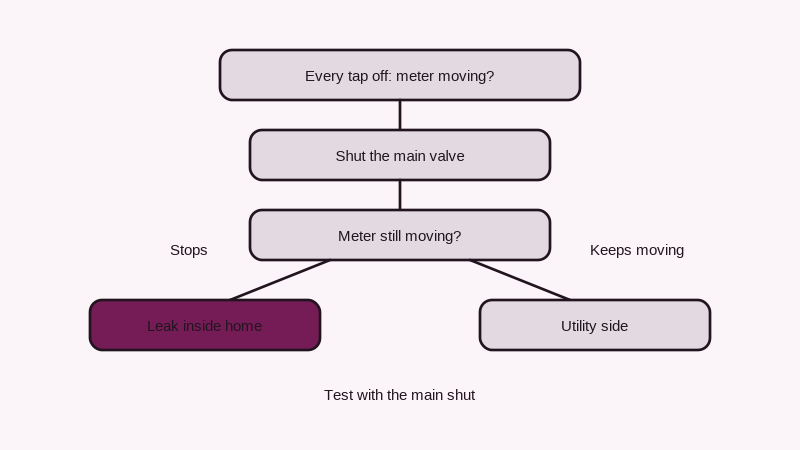
Work through these in order:
- Read the meter, wait an hour with all water off, then read it again.
- Put the softener in bypass and repeat the test.
- Drop a little food coloring into each toilet tank and look at the bowl after twenty minutes, without flushing in between. Colored water in the bowl means a leaking flapper.
- Walk the yard looking for wet patches, a hissing sound or strips of unusually green grass.
Hidden leaks are covered in bills that rise with no visible leak, and why a water bill runs high gives the full set of causes.
What else pushes a water bill too high?
Past the softener, the usual causes are a leaking faucet or shower valve, a running toilet, a leaking water heater or pipe, irrigation, a change in household size and rate changes from the utility. The EPA says leaks in an average household can waste more than 9,300 gallons of water every year, so small leaks add up quietly.
Toilets are the top suspect. A flapper that fails to seal can lose water all day. The remedy is in why a toilet keeps running. Slab and underground leaks are harder to find, and when the meter keeps moving without a visible cause, you may need a leak detection visit. The page about what leak detection costs explains how those quotes work.
Compare several bills, not one. Look at the dates the meter was read and the usage in each period. If usage climbed after the softener went in, that points to the unit. If it climbed over summer, think irrigation.
When should a plumber take a look?
Get a plumber when the meter runs with everything off, when the softener shows a stuck cycle, when water shows up at the base of the unit, or when the checks above do not reveal the cause. Do not keep running a unit you believe is stuck. Send a request and describe what the meter did.
A plumber who works on softeners can test the valve, inspect the drain line and reset the unit or advise on replacement. Ask for written findings and a quote before any parts are replaced. If the unit is under warranty, tell whoever is quoting, because the maker may have to do the repair. For other jobs arranged across the north Valley, see the Mission Point Plumbing front page.
What faults make a softener waste water?
Typical faults: a stuck valve that holds the unit in backwash or rinse, a drain line that runs constantly, a failed timer or control board, a worn seal that lets water leak to drain and a brine tank that overfills. Any of them can run water for days unnoticed. Stand by the unit and listen for running water while every tap is off.
An easy check: with no tap on, stand beside the softener and listen for trickling in the drain line, then inspect the drain hose and the floor drain. Read the display. If it shows a cycle in progress hour after hour, it is stuck. Turn the bypass valve to bypass and check the water meter. If the meter slows or stops, the softener is to blame.
A stuck unit needs repair or a reset from a plumber or the manufacturer, not force. Never take the cover off an electric control head while it has power.
Common questions
Does a softener increase my sewer charge?
Sewer charges are often based on water use, so extra water sent to the drain, regeneration water included, may be counted. A normal softener has only a small effect. A stuck unit running constantly to drain could raise it. Check your bill to see how your sewer charge is calculated.
What shows that my softener is stuck?
Listen for running water at the unit when nothing else is on, check the control display for a cycle that never ends, and look for a constant trickle in the drain hose. Move the bypass valve to bypass and watch the meter. If the meter stops, the softener is the one using the water.
Can the softener stay in bypass?
Yes, briefly. Bypass sends untreated water through the house, so you lose softening but nothing breaks. Use it only while waiting for a visit from a plumber. Months in bypass defeat the purpose if you bought the unit to protect your water heater.
How long does a diagnostic visit take?
Often about an hour for a softener check, longer if the cause is a hidden leak elsewhere. The plumber will explain what the test shows and what comes next before any repair starts, and the written quote arrives before any parts are replaced.
Must I stay in while the plumber checks the softener?
Yes. An adult should be present to point out the meter, the main shutoff and the softener, and to approve any quote. Standing next to the plumber the whole time is not necessary. Putting recent water bills on the table helps, so the plumber can see when usage changed and by how much.