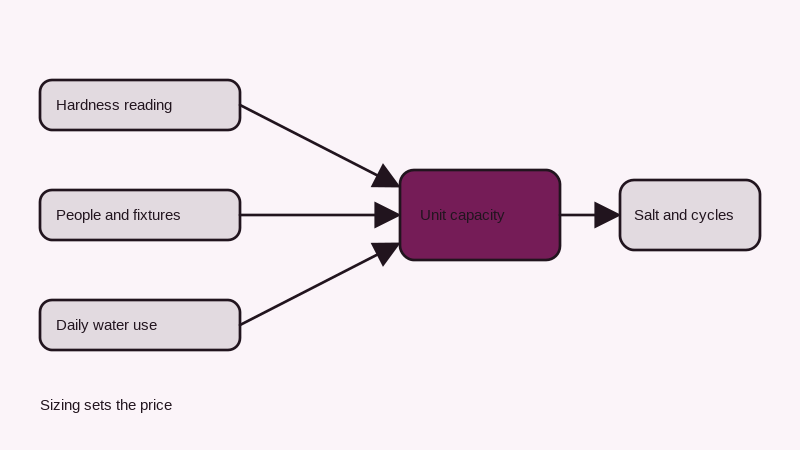
Once installed, a whole-house softener is the sum of the equipment, the plumbing work that ties it into your main line, the drain and power it needs, any permit, and the salt or media bought afterward. No figures are printed here, since a number that suits one house misses the next. Compare written quotes line by line. This page belongs to our guide on water softener installation in Sylmar.
What goes into a softener installation quote?
A quote has five parts: the softener itself, plumbing connections and a bypass, a drain line for the regeneration discharge, electrical power, and labor with any permit. Extras like a pre-filter, a sediment filter or a salt-free conditioner add to it. Equipment cost is set by unit size, which follows from your hard water and household.
Have each plumber price an identical scope so the quotes can be compared. If one lists the unit and another says only "softener installed", ask what was left out. A quote should name the model and capacity, the valves, the pipe and fittings, the drain connection, the outlet work and the setup of the salt supply. Our article on softener installation pricing lays out the general drivers.
How does my water hardness change the price?
Harder water calls for a bigger unit or more frequent regeneration, and a larger tank costs more. Hardness is stated either as grains per gallon or as milligrams per liter, and it varies by water source and street. Read LADWP's yearly Drinking Water Quality Report, or your own district's, for the water you receive.
A hardness figure for the north Valley is beyond us, because the water comes from a blend of sources that changes, and the report tables must be read for the right year. A single grain per gallon corresponds to roughly 17.1 mg/L, handy if the report uses the other unit. A plumber can also test your tap with a strip or meter. Bring the reading to the quote, because sizing depends on it, not on guesswork. For the basics of scale damage, see hard water scale prevention.
How does household size affect the quote?
Sizing rests on hardness and daily use. A bigger household uses more water, so the unit regenerates more often or needs more capacity. The plumber estimates daily use from the number of people and fixtures. Oversizing wastes salt and money, while undersizing lets hard water break through.
Have the plumber put the sizing math in the quote: the people in the house, the hardness reading and the resulting capacity. A plumber unable to explain it is guessing. Also ask how often the unit regenerates and how much salt it consumes. Running cost matters as much as the install price, so compare it.
What plumbing and drain work is involved?
The plumber fits bypass valves, taps into the main supply beyond the point where you want soft water, adds a drain line for brine discharge, and hooks up power. Hose bibs and sometimes outdoor lines stay on hard water. The unit's location, whether on a wall, in the garage or inside a closet, changes the pipe length.
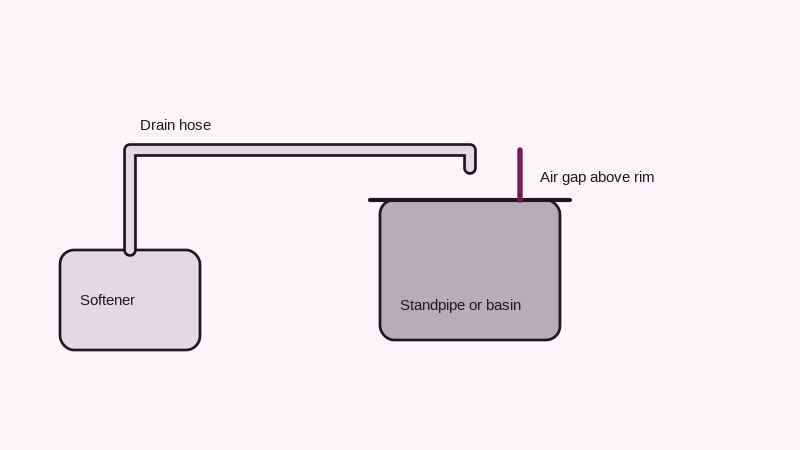
Access drives cost here. A garage with the main line nearby is simple, while a hillside house with the main far from the equipment spot takes longer. Draining into a laundry standpipe or a floor drain is a standard choice, with an air gap built into the plan. Ask where the drain will run, who patches walls and whether trenching is needed. Refuse a drain that empties somewhere the plumber cannot explain.
Do salt-free systems cost less?
They can cost less to run, since no salt is bought and no brine is discharged, but they work differently. A salt-free conditioner alters the way scale forms rather than removing the hardness minerals, so results differ. Ask for the maker's claims in writing.
For true soft water, a salt-based unit delivers it. To reduce scale on fixtures, a conditioner may do. Compare outcomes, not just prices. Some areas restrict brine discharge, and rules vary. Ask the plumber whether any rule applies to you, and ask LA Sanitation and Environment, which runs the city's sewers, if you need confirmation.
Do I need a permit, and who should install it?
Supply line changes may require a permit, and inside the City of Los Angeles the Department of Building and Safety grants it. Ask the plumber who files for it. California demands a contractor license for work above a modest value, and in every case where the work needs a permit.
Some owners can install one themselves, but a leak at the main is costly, and some warranties demand a qualified installer. Check the maker's terms. Compare quotes by scope, ask for the license number on each, then confirm it on the CSLB site. Should a plumber claim no permit is required, have LADBS verify for your address, since rules change.
What does a softener cost to run after installation?
Running costs are salt, water used for regeneration, electricity for the controller and periodic service. Each is small monthly, but they add up across the unit's life. Request a running-cost estimate from the plumber, based on your hardness and household.
Read the maker's warranty and what it demands. Keep the manual and note the regeneration settings. If your water bill climbs after installation, our page about softeners and high water bills shows how to check. To compare options, submit the quote form to Mission Point Plumbing. Someone reads requests on weekdays, 9am to 5pm, and a nearby plumber visits you.
Common questions
Does a softener pay off in the north Valley?
That turns on your water, your fixtures and what hard water costs you in scale and appliance wear. Read your yearly LADWP report, look at the crust on fixtures and have a plumber run a test. Weigh the running cost against the benefit before deciding.
Can I install a softener myself?
Some owners do, but the work involves the main line and the drain, and mistakes cause leaks. A permit may apply, and some warranties need a qualified installer. Read the maker's terms, ask the City, and set it against a written quote.
How long does installation take?
Often part of a day for a straightforward install, longer if pipe or drain must be rerouted. Water service is interrupted during the work. The plumber should put the timing in the quote and announce when the supply will go off.
Will a softener lower my water pressure?
A properly sized and fitted unit should cause no noticeable drop, but a clogged resin bed, a small valve or undersized pipe can. Mention your pressure to the plumber before the work, and have them check it with a gauge afterward and show you the reading.
Do I still drink the soft water?
That is a personal choice, and some people prefer a separate filter at the kitchen tap. A salt-based softener leaves more sodium in the water. Anyone on a low-sodium diet should ask a doctor, and ask the plumber about a bypass for drinking water.