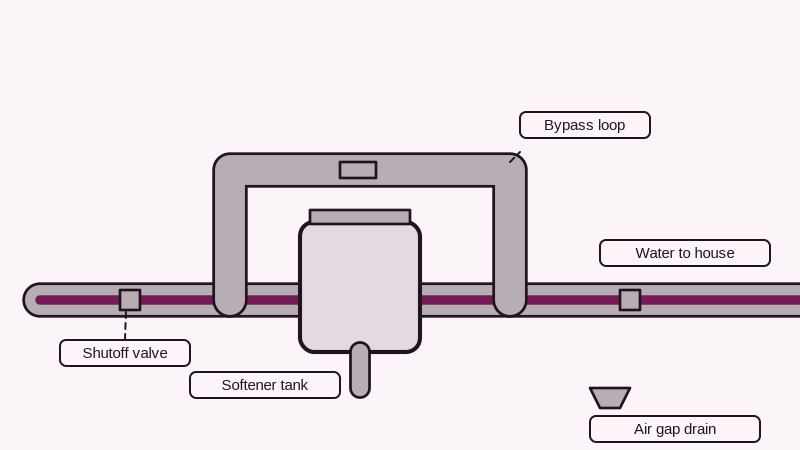
Owners with basic tools do fit these. The order of work is: valve off, tee into the supply, bypass, drain line, power, then dial in the hardness setting. Every step hides a trap, and this guide walks through them in order before moving on to scale removal. Choosing and sizing a unit is covered on the water softener installation hub. Coming from the front page instead? Head back to Mission Point Plumbing any time.
Can you install a water softener yourself?
Often yes, if you can sweat copper or work push-fit connectors and are unafraid of a drain hose. Once a permit, a gas line or a hole in drywall enters the picture, the answer changes. The plumbing is the easy half; the real risk is a slow leak you only spot after bedtime, so pressure-test every joint before you walk away.
First learn what you are fighting. Calcium and magnesium picked up from rock and soil make water hard. The USGS calls anything under 61 mg/L soft and anything over 180 very hard, with two middle bands between; the page is linked at the foot of this one. To convert grains per gallon, multiply by 17.1. LADWP posts yearly water quality reports for the Valley neighborhoods it serves, and blended sources mean the answer shifts by street.
A strip kit from a hardware store, or a sample sent to a lab, tells you more than any neighborhood average. Write the figure down: the unit's size and its salt setting both depend on it.
Where does a water softener go?
Standard placement is the cold supply just past the house shutoff and upstream of the tank heater, which means every tap and shower is covered. Keep one outdoor spigot upstream, since lawns and cars do not need salty water. You also want a drain within reach, a grounded outlet, and floor space for salt bags.
In most Valley tract houses that means the garage, a utility wall along the side yard, or a laundry closet. Measure first: a typical tank and brine cabinet need roughly the footprint of a kitchen trash can, plus elbow room for the lid.
A bypass on the head lets you isolate the unit in seconds. Skip it and the first filter change turns into a plumbing job. Where copper meets brass, use dielectric fittings, and keep flexible connectors from kinking.
The drain is the fiddly part. Brine leaves the unit and must reach an approved drain across an air gap, a visible break that stops sewage ever being sucked backward. Ask your sewer agency whether any local rule limits salt discharge ahead of purchasing a salt-regenerating model.
What do you need besides the softener itself?
Shop for two shutoff valves or a bypass kit, pipe and fittings to suit what you have (copper, PEX or something older), drain hose and clamps, an overflow line, a pipe cutter, thread tape, and the opening bag of salt. Push-fit connectors speed the cut-in a lot, and plastic pipe is kinder to tools than copper.
Add a pressure gauge to the list. Softeners have a working pressure window, and a house running above it will wear out the valve early. When the needle sits too high, a regulator is the cure, and our explainer on whole-house pressure regulators shows what that part does.
Old galvanized steel is the red flag. Cutting corroded pipe tends to crack the next joint along, and a plumber who can replace a longer run is the safer pick. Galvanized pipe replacement shows the alternative.
What gets rid of the scale already on your fixtures?
A soak in white vinegar, or a mild citric acid mix, strips scale off showerheads, aerators and faucet tips in about an hour; a toothbrush finishes the job. Water heater tanks gather scale inside where no soak reaches, and the cure there is a drain-down and flush. Skip acid on natural stone, and never blend cleaners.
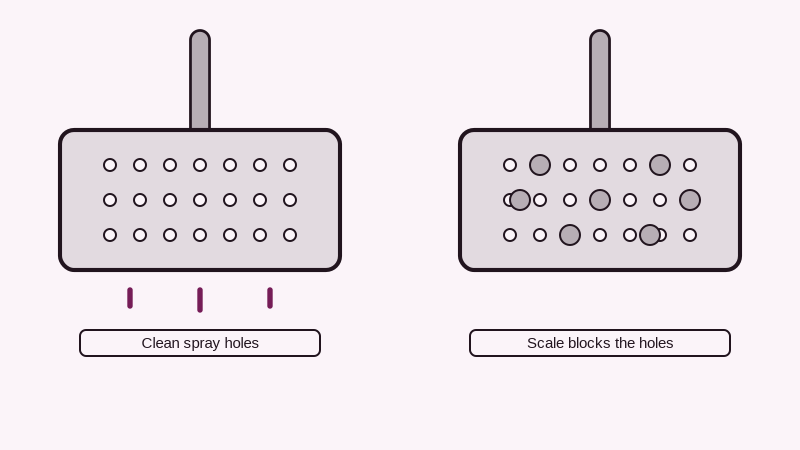
Scale is calcium carbonate. According to the USGS, heating hard water drops it out of solution, and it can shorten appliance life and clog pipes. A new softener stops fresh deposits but will not strip old ones overnight, so expect weeks of gradual loosening. The longer story sits under removing hard water scale, with prevention in hard water scale prevention.
For a showerhead that has welded itself on, wrap a rag around it and turn the wrench slowly. Brass and copper both strain if forced.
When does a softener job stop being a DIY job?
Stop when the supply pipe is ancient, the layout is cramped, a permit looks likely, or no drain is within reach. Same if the main will not shut fully. A plumber will route the drain properly, pressure-test for leaks and leave the unit ready, so the first salt delivery is the only thing left for you.
What it costs depends on pipe material, distance to the drain and which equipment you pick; what a softener installation costs describes how a quote is assembled. To hand it over, fill in the form at request a quote and a neighborhood plumbing business follows up.
Softening trades calcium for sodium, so a doctor should hear about it first if sodium is restricted in your diet. A separate drinking tap that bypasses the unit is a common fix.
Common questions
Does a new softener push the water bill up?
Not by itself. It spends some water on each cleaning cycle, though scale-free fixtures keep flow healthy. If the meter spins faster afterward, suspect a valve stuck mid-cycle or a drain hose that runs nonstop; our note on softeners and bills lists the checks.
How much upkeep is a softener?
Refill the salt as it is used, often within a month or two, depending on household size and the hardness reading. Peek into the brine tank for a hard crust that stops salt dissolving. Resin lasts years before it tires; a pro can test whether yours has.
Can any home have a salt-based softener?
Not necessarily. Salt-regenerating units discharge brine to the sewer, and some local agencies set limits. Ask LA Sanitation or your own sewer agency before buying. The seller or a plumber should also be able to say which models comply for your property.
Could a softener affect my water heater coverage?
Possibly. Heater makers write their own terms, and some set conditions on water hardness or treatment. Check the warranty terms for your tank before altering the supply, and file the softener paperwork next to them. Softened water is usually kinder to a tank, but the paperwork decides what counts.