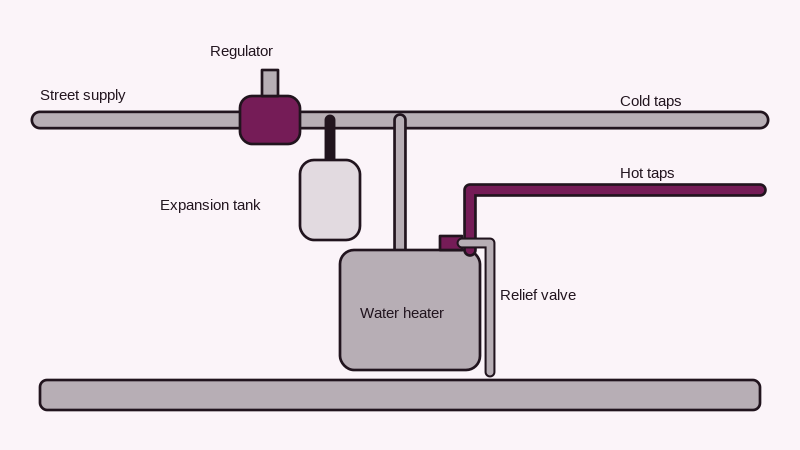
Put simply, a hot water pressure regulator is a regulator installed on the cold line that feeds the heater. It limits pressure for everything past that point, including the tank. Working with it, an expansion tank absorbs the extra volume created as water heats, and the relief valve, rated for temperature and pressure, serves as the final safeguard. If only the hot side runs weak, inspect the heater or its valves before blaming a missing regulator. This page belongs with water heater repair in Sylmar.
Does the hot side need a regulator of its own?
One is needed on the incoming supply when house pressure is above what the heater and fixtures are built to handle. No regulator exists solely for hot water. A single regulator at the main protects hot and cold lines together. When your pressure stays within the manufacturer's range, you can skip it.
Measuring settles the question. Screw a gauge onto an outdoor hose bib and it shows house pressure. The heater's manual lists its working pressure, and the tank's relief valve carries its own rating. If the house number is higher than both, a regulator is part of the solution. Read about the regulator at the main to see how it is set up.
Where is the regulator located in relation to the heater?
It is installed upstream, normally near the spot where the supply pipe comes into the house, or just past the main shutoff, so the heater receives water at a safe pressure. Look for a brass valve shaped like a bell, topped by an adjusting screw; it never mounts on the heater.
Distance from the heater does not matter, since the regulator governs every pipe beyond it. To track it down, try the garage, the spot by the front hose bib, or the meter area. The regulator location page names the usual spots. If you find nothing, the house may lack one, which is typical of older homes.
Why is my hot water weaker than my cold?
Weak hot with normal cold typically means scale or sediment in the heater, an outlet valve that is only partly open, a scaled mixing valve, or narrowed hot pipes. A cold-side regulator would not cause a hot-only problem. At a fixture it looks like a feeble hot tap with healthy cold.
To test, run one tap on hot and then on cold. If both feel weak, the supply or house pressure is the suspect. If the weakness is only on hot, inspect the heater, the valves on it or the hot pipes. The guide on weak hot water pressure walks through the checks, and flushing the tank helps if sediment is responsible.
What is an expansion tank for?
Heating makes water expand. In a closed system, where a regulator or check valve blocks flow back toward the street, the added volume has nowhere to go, so pressure jumps. A small expansion tank absorbs it. Lacking one, the relief valve may drip, and both fixtures and heater wear out sooner.
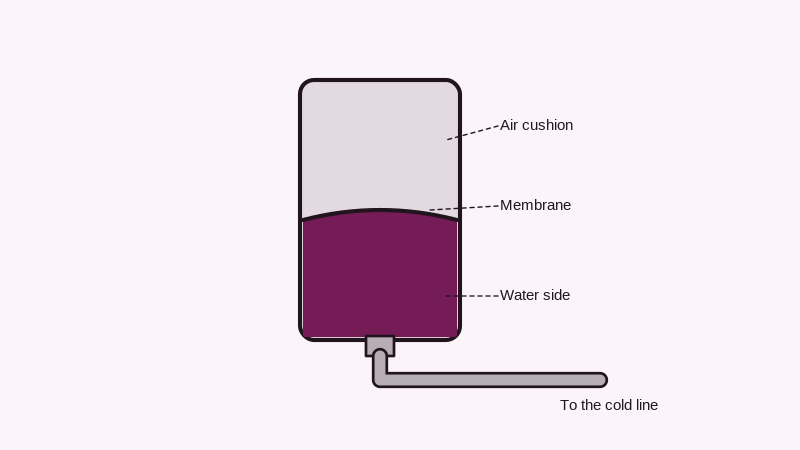
After a regulator goes in, ask the plumber whether the system is now closed and calls for an expansion tank. Whether it is required is a code question for the plumber and LADBS, not one we can answer for your house. The tank's air precharge must match house pressure, and it can fail with time, so a plumber should test it. See expansion tank replacement.
Why would a heater's relief valve keep dripping?
A valve that drips generally signals that pressure or temperature is running too high, or that the valve is worn. Possible causes: a closed system with no expansion tank, house pressure over the setting, a bad thermostat or a tired valve. Never plug it.
As a safety device, the relief valve has to stay free to open. When it drips, test house pressure and the expansion tank, then replace the valve if it is old. Very hot water can scald, and a valve that keeps opening points to a deeper issue. See relief valve replacement. If water gushes out or the tank is extremely hot, cut off the heat source and contact a plumber.
What if the pressure is too high for the water heater?
Too much pressure stresses the tank, fittings, relief valve and every fixture. The heater may die early, leak, make the relief valve drip and set pipes banging. A regulator together with a healthy expansion tank prevents most of this kind of damage over the years.
Many appliance warranties name a maximum pressure, and exceeding it may complicate a claim. Save your gauge reading and the manual. The EPA reports that leaks cost an average household more than 9,300 gallons yearly, and a relief valve that drips contributes. Pressure also varies around the north Valley with elevation, so measure at your own address.
Who installs a regulator, and what does it cost?
The plumber installs it on the supply line, sets it with a gauge and tests the expansion tank. No prices are posted here, because the written quote is what counts. It should itemize the regulator, tank, labor, any permit and the pressure setting.
Because the job involves the water supply, it may need a permit, which for addresses in the City of Los Angeles comes from the Department of Building and Safety. A California contractor license is required once a job passes a modest value and for all permit work, so ask for the license number. For price drivers, read regulator costs. To arrange a visit, send the quote form to Mission Point Plumbing. Someone reads requests Monday to Friday from 9am to 5pm.
Common questions
What pressure should my water heater run at?
Your heater's manual gives the working pressure, and the relief valve is rated on the tank. Match house pressure to those numbers, which a gauge reveals. We give no single figure because models differ, so read your own paperwork and the label on the tank.
May I turn the regulator's screw myself?
Most have an adjusting screw, yet turning it with no gauge is guesswork. Too low weakens showers; too high strains everything. A regulator that is old or seized needs replacing, which is plumbing work. Let a plumber set it using a gauge.
Does a regulator reduce hot water flow?
It lowers pressure at the fixtures, not necessarily flow, though an overly low setting feels weak. A correctly set regulator keeps flow comfortable while shielding the plumbing. Tell the plumber the pressure you prefer and have the setting written on the quote.
How do I recognize an expansion tank that has failed?
Look for a relief valve that drips, pressure spikes on a gauge, banging pipes, and a tank that rings hollow with water inside when tapped. A plumber can test the precharge and swap the tank out. Do not assume it is still good simply because it looks fine.
Is a tankless heater affected by pressure too?
Yes. Tankless units have inlet pressure limits and need adequate flow, so pressure that is very high or very low leads to trouble. The manual gives the range, and the plumber records gauge readings ahead of the work and again afterward. A regulator is sometimes added during installation.