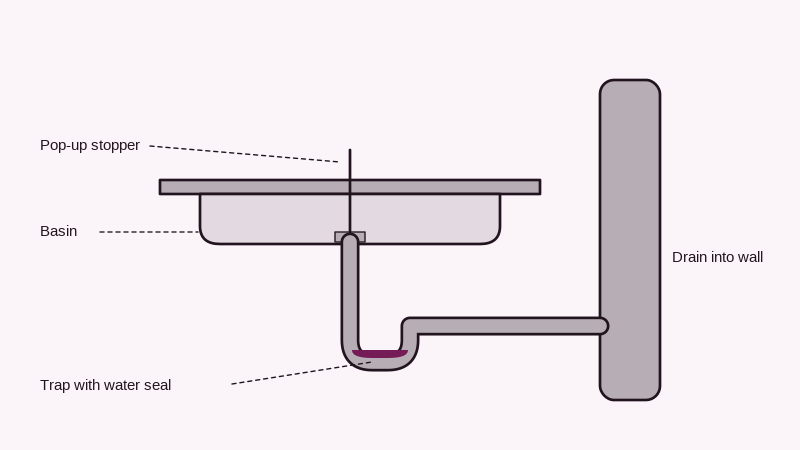
The pop-up stopper is the first place to look. Pull it out, peel away the hair wrapped around it using a bent coat hanger or a barbed plastic strip, rinse it, and run the tap. Water still standing? Plunge with the overflow sealed, then open the curved pipe below the basin. That routine frees most bathroom basins without chemicals. Blockages beyond these are handled in our drain and toilet clog help.
Where does the blockage usually hide in the pipe?
Mostly within the top twelve inches or so of pipe: around the stopper linkage, in the short tailpiece under the basin, or in the bend of the trap. Hair wraps the pivot rod, catches soap film and builds into a wad. A clog farther into the wall gives itself away when other drains start slowing as well.
Knowing which it is saves effort. A single sluggish basin points to something close and reachable. If the tub and toilet gurgle too, suspect the branch or main line, which is a different job. You will find the telltale signs gathered in the causes of a slow sink drain.
What should I try before reaching for tools?
Remove whatever is visible first, then add warmth and suction. Lift the stopper, scoop out debris, wipe the rim and pour hot water from the tap down the drain; avoid boiling water, which can soften plastic. Next comes the plunger. A cup plunger needs a seal, so push a damp rag into the overflow slot and pump with brief, firm strokes.
A barbed plastic strip is very cheap and pulls out surprising amounts. Slide it next to the stopper hole, twist it, and bring it up slowly.
The sequence:
- Lift out and wash the stopper.
- Fish out hair with a strip or wire.
- Flush with hot water from the faucet.
- Plunge while the overflow is plugged.
- Open the trap if the water is still slow.
How do I clean the trap beneath the sink?
Set a bucket beneath the trap, then undo both slip nuts, using fingers or pliers, drop the curved section free and empty it. Scrape the inside, rinse, check the washers, and refit hand-tight plus a small extra turn. Then run water and watch the joints for seepage. Expect dark hair-and-soap paste, and a smell to go with it.
Stuck plastic nuts crack under force, so wrap a rag around them for grip instead. An old corroded metal trap can break fittings on removal; if that looks likely, step back and ask a plumber.
Pay attention to the trap's alignment on reassembly. A twisted trap leaks at the nut and invites a second job. The tailpiece should drop straight into the trap without strain.
Is chemical drain cleaner a sensible choice?
Better to avoid it. Caustic openers burn skin and eyes, release fumes in a small room, and sit in the basin until the next person, or the plumber, comes across them. They also barely dent a hair mat. If some has already gone down, ventilate the room, add nothing else, and tell whoever opens the trap.
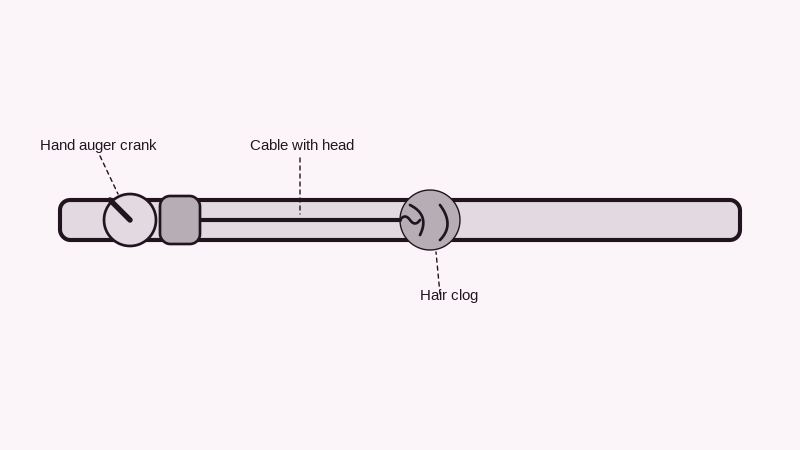
The mechanical methods above are safer. A small hand auger from the hardware store reaches past the trap into the wall pipe. Feed it in gently, turn the handle, then draw out whatever it snags.
Avoid pressurized or powered tools you have never used, and never push a sink snake into a pipe you suspect is cracked.
At what point should a plumber step in?
When the trap is spotless yet drainage stays slow, other fixtures back up, or fittings are too corroded to open, the trouble lies beyond the sink. Plumbers carry longer augers and cameras. Bring one in too after leaks on reassembly, in a rental, or when the clog keeps returning.
North Valley housing from the 1950s to 1970s frequently has aging drains with rough interiors that snag debris, and repeat clogs there can mean a partial blockage farther down. Larger options are covered in unclogging a drain. Send the quote form and Mission Point Plumbing forwards the request to a local plumber. The areas served are listed on the Mission Point Plumbing front page.
Kitchen sinks have their own guide, clearing a kitchen sink, and pricing factors appear in the cost of unclogging a sink.
What stops this sink from clogging again?
Stop hair at the source and clean the stopper regularly. A cheap mesh strainer over the drain does most of the work, and pulling the stopper once a month takes two minutes. Rinse toothpaste and shaving residue away with plenty of water, since soap binds to hair and forms a plug over weeks.
A basin that clogs every few weeks despite this deserves a plumber's look, because a rough joint, a flat pipe run or a partial blockage farther along may be behind it. Correcting the slope or clearing the line once is usually better than cleaning the stopper forever.
Common questions
How long does clearing a bathroom basin take?
Pulling hair off the stopper takes minutes, and cleaning the trap rarely runs past half an hour with a bucket and pliers handy. Anything that calls for an auger or a visit takes longer. If a clean trap changes nothing, stop there and arrange help.
What do I need to know before booking a drain visit?
Learn what the visit covers, whether a camera or auger is included, and what follows if the blockage comes back. Have the findings written down, and look up the contractor's classification through the state board lookup. Ask about a follow-up visit if it reappears within days.
Why does my bathroom sink keep clogging?
Soap and hair build up in one place, and older rough-walled pipes snag more. Fit a hair catcher, wipe the stopper often, and run hot water through the drain now and then. If the clog keeps returning, the pipe may be narrowed farther in.
Do baking soda and vinegar help?
It can loosen a light soap film, but it rarely clears a hair mat. It is harmless to try and gentler than a chemical cleaner, though plan to follow it with mechanical removal. Rinse with hot tap water afterward, and do not combine it with any commercial product.
Must someone stay home for a drain visit?
Yes, a person needs to be there to point out the sink, report other slow drains, find the shutoff valves and approve the finished work. Tenants need their landlord's agreement. Mention parking and pets when booking, and say whether this is the only bathroom, since that affects urgency.