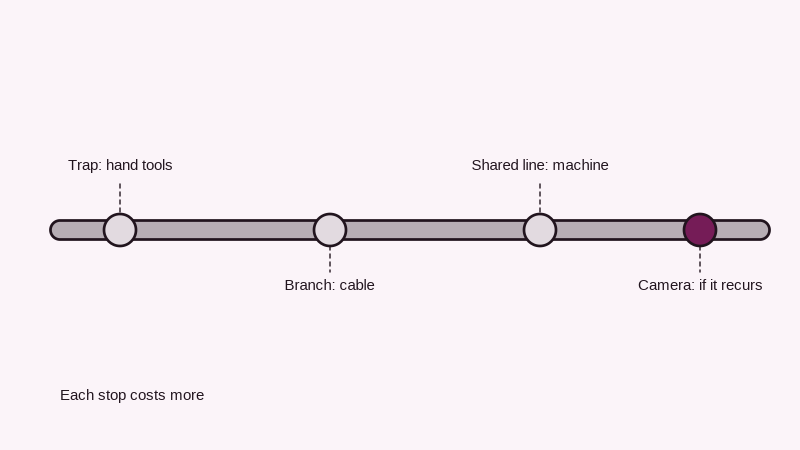
What a plumber asks to free a sink hinges on three questions: the depth of the clog, the difficulty of reaching it, and whether billing is by the job or by the hour. Debris caught in the trap under the basin is a short job. One farther into the wall branch calls for a cable machine, and a line that keeps clogging may need a camera. No dollar amounts are printed on this site, so what follows is the logic behind a quote. Our drain and clog hub lists related work.
What determines the charge for clearing a sink?
Chiefly the clog's location and cause, the equipment needed and the access. A trap or tailpiece clog yields to hand tools. A clog farther along the branch calls for an auger or cable machine. A repeating or unexplained blockage may justify a camera inspection or high-pressure water jetting. Time on site, parts and any minor repair that needs no permit also feed the total.
Cost levers, from least to most work:
- Trap or tailpiece: hand tools, short visit.
- Branch line behind the wall: cable machine, longer visit.
- Shared line serving several fixtures: larger equipment, more time.
- Recurring clog: camera inspection to find a cause.
- Damaged or collapsed pipe: repair or replacement, a different job altogether.
Is a kitchen sink pricier to clear than a bathroom one?
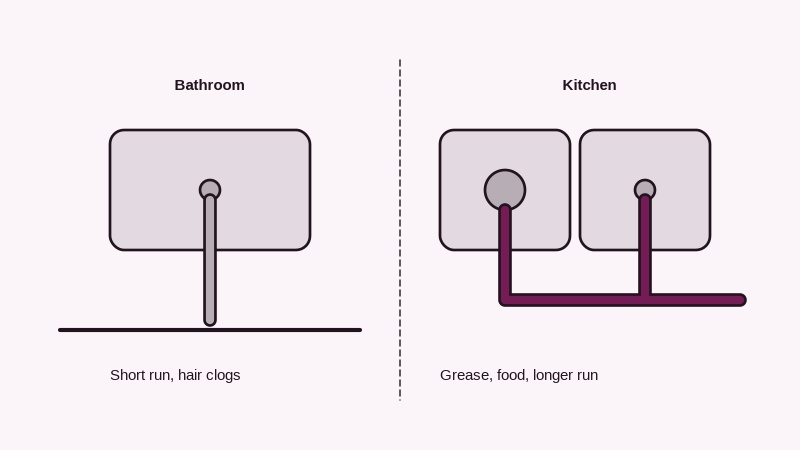
Often slightly, because kitchen drains carry grease and food scraps, so clogs pack tighter and sit in longer runs, and a disposal may need pulling or bypassing. Bathroom clogs are mostly hair and soap, typically near the stopper or trap. Access and what the plumber finds matter more than the room.
If you want to try the bathroom version yourself first, the steps are in unclogging a bathroom sink, and unclogging a kitchen sink handles the greasier case. For symptoms hinting at a bigger problem, read why a sink drains slowly.
Should a clog be billed at a flat rate or by the hour?
Neither wins every time. A flat rate brings certainty on a standard clog and protects you from a slow visit, whereas hourly billing can be fairer when unknowns loom. What matters is knowing which applies and which extras alter it. Ask what follows if the first method fails and a second tool is required.
Settle these before work begins:
- Is the charge per visit or per hour, and is there a minimum?
- Does it include a camera if the cable fails to solve it?
- What happens when the clog comes back within days?
- Are parts such as a replacement trap or washers included?
How hourly bids are built is explained in what a plumber costs per hour, and overall plumber costs give the wider picture.
Why do two quotes for one clog differ so much?
They may not describe the same job. One might cover a hand-cleaned trap, another a cable run through the branch line, another a camera inspection. Overhead, equipment, visit timing and whether the quote is firm or an estimate all vary. Comparing scope tells you more than comparing totals.
Older homes add variety. A large share of north Valley houses were built in the 1950s through the 1970s, and their drain lines can be rough inside or shallow in slope, which changes how a clog behaves. A plumber who has seen inside the line can explain why the clog formed, and that explanation is part of the fee.
How can I avoid paying twice for one clog?
Ask about the cause, not only the clearing. Hair at the trap suggests a strainer; roots or a sag in the line suggest an inspection. Keep a written note of what was done and where, and ask what follow-up applies if the blockage returns.
Try the cheap steps first if you feel comfortable: clean the stopper, plunge and open the trap, as our bathroom guide describes. If they fail, you will have eliminated the easy causes and can report them to the plumber, which shortens the visit.
Must the contractor hold a license?
California sets a dollar threshold past which a contractor license is expected, and any permitted job requires one. Simple clog clearing often falls under it, yet the licensing board's website lets you check anyone before they begin. Get the scope and exclusions on paper.
To start, fill out the quote form and a local plumber can be dispatched to inspect the drain. The home page lists the neighborhoods covered.
Common questions
How much time does a sink clog job need?
A trap cleaning takes minutes, and a cable run through a branch line typically wraps up in an hour or two. A camera inspection or a stubborn blockage takes longer, and that sink is out of action meanwhile. The bid can carry a time window, so request one before work starts.
What questions should I put to a plumber about a sink clog?
Find out if pricing is flat or hourly, if a camera follows when the first try fails, what applies to a repeat clog and who pays for parts. Have the findings recorded in writing and verify the contractor with the state board before anyone starts, since a written scope protects you if the first attempt falls short.
Is a camera inspection worth it?
When the same drain clogs repeatedly, yes: it reveals whether grease, roots, a sag or damage is responsible, so you cure the cause rather than clear the symptom. For a first clog in a fixture with a clean history, it is usually unnecessary. Have the plumber explain the recommendation.
Will insurance pay for unclogging a sink?
Usually not, because clearing a clog counts as maintenance. A backup that floods a room may fall under water damage coverage, depending on the wording. Keep photographs and notes, and ask the insurer. What any given policy pays is outside our lane.
Does someone have to be home for the visit?
An adult should point out the sink, mention other slow drains and give the approval, because the plumber cannot begin without that go-ahead. Renters should check with the landlord first. Mention pets and parking to the plumber so the visit starts smoothly.