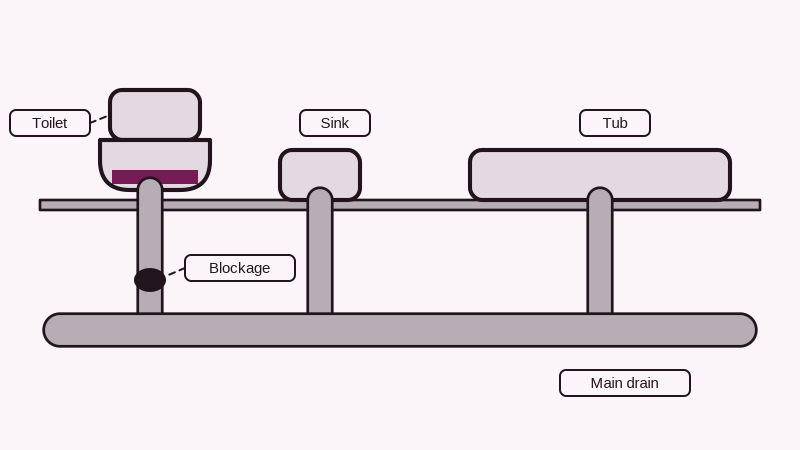
Quit flushing, then loosen the obstruction with a flange plunger, using firm, even pushes and pulls. If nothing shifts, a closet auger goes deeper and leaves the porcelain unmarked. Chemical drain cleaners are a poor choice for a toilet. Most clogs yield within minutes by this route, but a clog that comes back, or several fixtures backing up together, means trouble in the line. Then see the page on getting a plumber for a clogged toilet, or use the quote form.
Which step comes before anything else?
Do not touch the flush handle. If the bowl is climbing toward the rim, lift the tank lid and hold the flapper shut so no more water flows in, or turn off the supply valve behind the toilet. Then pull on gloves, spread towels and get the plunger. A calm first minute heads off most overflows.
A brief checklist:
- Do not flush again. Flushing into a blocked bowl is how floors get flooded.
- Turn the supply valve clockwise until it stops, so the tank cannot refill the bowl.
- Spread towels or a plastic sheet around the base.
- Crack a window if the odor is strong, and keep kids and pets out of the room.
- Check the water level in the bowl. If low, add some, since a plunger needs water to work. If near the rim, bail a little out with a cup.
A slow drain suggests a partial blockage that plunging may clear. If water does not move at all, the clog is solid and the auger may be needed.
How should a plunger be used on a toilet?
Choose a flange plunger, the type with the fold-out rubber collar, rather than the flat cup kind made for sinks. Seat the flange in the drain opening so it seals, press gently first to push out air, then pump firmly ten to fifteen times without breaking the seal. End with a sharp pull and see if the bowl empties.
Details that count:
- Seal. Rubber has to cover the whole opening. Wear gloves and keep towels handy.
- Water level. The plunger head must sit underwater. With too little, you only push air.
- Rhythm. Start gently so bowl contents do not splash, then switch to steady, forceful strokes.
- Repeat. It may take several rounds. Rest between sets and let the water settle.
A bit of hot tap water in the bowl and a squirt of dish soap can lubricate the clog so it slides away. The water should be hot, never boiling, because boiling water can crack porcelain. If the level drops fast and the bowl refills normally, the clog is gone. Flush once, gently, to confirm.
What can I do when the plunger fails?
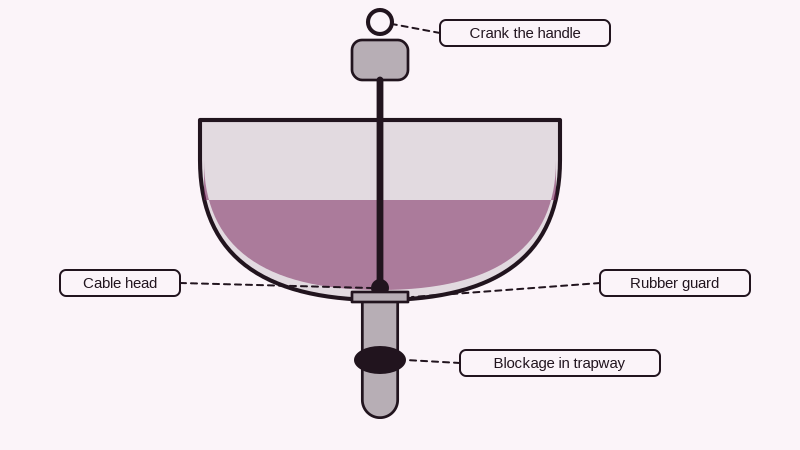
Reach for a closet auger, a short cable with a curved tip made for toilets. Guide the curved end into the drain, crank the handle to rotate the cable and feed it forward until it meets the obstruction, then work it to and fro. Unlike a general drain snake, a closet auger is built not to scratch porcelain.
Making the most of the auger:
- Retract the cable into its sleeve and rest the rubber guard in the bowl outlet.
- Push the cable forward as you turn the handle clockwise.
- When resistance appears, keep cranking to break through or hook the clog.
- Draw the cable back slowly, wiping off whatever comes up.
- Once clear, flush a single time with the tank lid and supply valve back in place.
When a toy or other hard object is the cause, the auger may bring it out, or you can lift it by hand in a glove. If it refuses to budge, stop and call a plumber. Forcing it can drive the item into the bend, where it is harder to reach. Read how to unclog a drain for the wider toolkit and the difference between a toilet clog and one in a drain line.
Which products and habits make things worse?
Stay away from chemical drain openers, which can linger in the bowl, splash and mar the finish or burn whoever works on the toilet next. Skip wire hangers and sink snakes too, since they scratch porcelain. Never combine cleaning products, as some mixtures release toxic gas. Flushable wipes cause clogs as well, whatever the package claims.
What to steer clear of:
- Chemical cleaners. They rarely move a solid clog, and they turn the bowl water into a hazard for the next person.
- Boiling water. It can crack a cold porcelain bowl.
- Mixed products. Bleach together with another cleaner can create dangerous fumes. Ventilate the room.
- Repeated flushing. It floods the floor.
- Wipes, paper towels and hygiene products. These cause many clogs in the north Valley, as everywhere. Use the bin.
If a child dropped something in, such as a toy, tell the plumber, since the usual method changes.
Is the clog in the toilet or the main line?
When only one toilet is blocked and every other fixture drains normally, the clog sits in that toilet or its short branch. If several fixtures run slowly or gurgle, or a downstairs tub or floor drain backs up when you flush, the obstruction lies farther along the main line, and a plunger will not reach it.
Clues to a deeper problem:
- A toilet that gurgles whenever the washing machine or a sink runs.
- Water rising in a tub or shower after a flush.
- Slow drains at every fixture rather than a single one.
- A sewage smell in the yard, or wet soil near the cleanout.
- Clogs that return after you clear them.
Within the City of Los Angeles, public sewers are run by LA Sanitation and Environment, and its site says the city operates more than 6,700 miles of public sewer. Before paying for a repair, confirm which stretch of pipe is the city's and which is yours. We have not verified that rule for individual addresses, so ask LA Sanitation or the plumber. If sewage comes up inside the house, treat it as an emergency, and see the emergency plumber page.
When is it time for a plumber to take over?
Call one if plunging and the auger both fail, the toilet blocks again within days, several fixtures are affected or sewage backs up, or a hard object is lodged. A plumber has cameras and larger machines to find and clear the problem without damaging the toilet or the line.
Hire out as well if the toilet rocks, which hints at a failed wax ring and possibly a leak at the base. Plumber for a toilet leak and what unclogging costs show how such jobs are quoted. Plenty of north Valley houses from the 1950s to the 1970s, including many in Sylmar and Pacoima, have older clay or cast iron lines with roots and offsets, the usual reason for repeat clogs. A camera inspection shows which applies.
To arrange a plumber, submit the form with your address, what you tried and whether other drains are slow. Your message goes to a nearby plumbing business, which then contacts you. No around-the-clock line is staffed here, and messages are read on weekdays from 9am to 5pm. The Mission Point Plumbing home page lists every other service covered.
Common questions
Do hot water and dish soap work on a clogged toilet?
Yes, as a first attempt on a soft clog. Squirt dish soap into the bowl, pour hot tap water in from about waist height, and leave it for ten minutes. Never use boiling water, which can crack porcelain. If the level has not moved after that wait, switch to a plunger instead.
What makes a toilet clog repeatedly?
Repeat clogs usually trace to a partial obstruction farther down, too much paper, a weak low-flow flush, scale in the rim jets, or roots and offsets in an older line. When it keeps returning, a camera inspection finds the cause. See toilet flush repair if the flush is weak.
Is it fine to pour drain cleaner into a toilet?
Better not to. Chemical cleaners seldom shift a solid clog, can mar the finish, and leave caustic water in the bowl for whoever works on it next. A plunger or closet auger is the safer choice, and a plumber can use mechanical tools that need no chemicals at all.
What if the bowl starts to overflow as I plunge?
Stop, close the supply valve behind the toilet and lift the flapper in the tank so nothing more flows in. Mop up with towels while wearing gloves. Do not flush. After the level falls, try again with gentler pressure. If it keeps rising, bring in a plumber without delay.
Might a blocked toilet clear by itself?
A soft clog sometimes drains off slowly, but waiting is unreliable, and a full bowl can overflow if someone flushes it. Treat it as blocked until it flushes normally. Do not flush as a test until the bowl water has gone down by itself, and warn the household so nobody tries it.