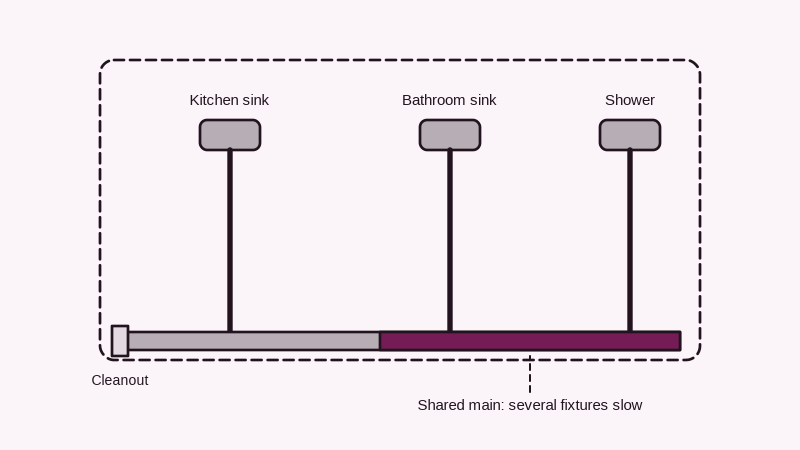
When water drains slowly, something is constricting the pipe: hair and soap scum in a bathroom basin, grease and food in a kitchen one, or an obstruction further along that several fixtures share. First decide whether the trouble stays with one sink or reaches throughout the house. Our overview of drain cleaning and clogs gives the wider view, and the Mission Point Plumbing front page lists other services arranged through this site.
What usually makes a sink drain slowly?
Typically a partial blockage sits in the trap or the pipe just beyond it. In a bathroom, hair tangled with soap scum and toothpaste residue on the stopper and in the trap is the common cause. In a kitchen, grease, coffee grounds and food scraps cool and cling to the pipe wall, narrowing it a bit more each week.
Picture the drain as a pipe slowly closing. Water still gets through, so months can pass unnoticed. Then a heavier load, such as a basin of dishwater, exposes the problem. A smell from the drain is another clue, because the film that slows water also feeds bacteria.
Less common causes exist. A dropped or jammed stopper or pop-up assembly can hold back flow. A blocked vent pipe can make a drain gurgle and run slowly, since air cannot enter behind the water. A sagging pipe section can trap water in a belly. In older homes, corroded pipes may have rough inner walls that snag debris.
The north San Fernando Valley has many homes from the 1950s to the 1970s, and their drain lines are often aged. Older galvanized or cast iron drains can build rust scale inside, narrowing the pipe and catching grease and hair faster. What lies in your walls is unknown here, but if drains in several rooms run slowly, age may be partly to blame.
Why does my shower drain back up when it is not clogged?
A shower that backs up even though its drain is clear usually has the blockage farther along, in a branch or main line shared with other fixtures. A vent problem is possible too. See whether the toilet gurgles or the sink slows while the shower runs. If so, the shower itself is not the problem.
An easy test: run the shower and watch the nearest sink and toilet. Bubbling or gurgling means air is being pushed through the traps, which points to a blocked branch. Next flush the toilet and watch the shower drain. Water or sewage rising there means the main line is restricted. That is plumber work, not plunger work.
When drains back up at the lowest fixture in the house, such as a shower or floor drain, the main line may be blocked. Inside the City of Los Angeles, LA Sanitation and Environment operates the public sewers, but the pipe from your house to the city main is another matter, and who is responsible for each section at your address has not been verified here. Ask the city before assuming, and have the plumber find where the blockage is. A camera inspection shows it.
Does pouring salt down the drain each night help?
No. Salt is not a dependable way to clear or prevent a slow drain, and no authoritative source recommending it turned up. Salt with boiling water may shift a little soap, but it will not dislodge grease farther down, and boiling water can soften some plastic fittings. A cup plunger, hand cleaning and routine upkeep work better.
What does help? Place a mesh strainer in a kitchen sink and a hair catcher in a shower or bathroom basin. Scrape grease from pans into the trash before washing. Rinse a drain with hot tap water after use, though not boiling water on plastic pipes. Clean the stopper and strainer monthly. Keep coffee grounds, rice, pasta and fats out of a kitchen drain. These habits cost little and prevent most slow sinks.
Why is my kitchen sink slow without being fully blocked?
A kitchen sink that drains sluggishly but never stops has a partial clog, most often a film of grease and food lining the trap and the pipe behind it. Water squeezes through a narrow channel, so no total blockage appears. Hot water alone fails to clear it, because the grease cools again farther down.
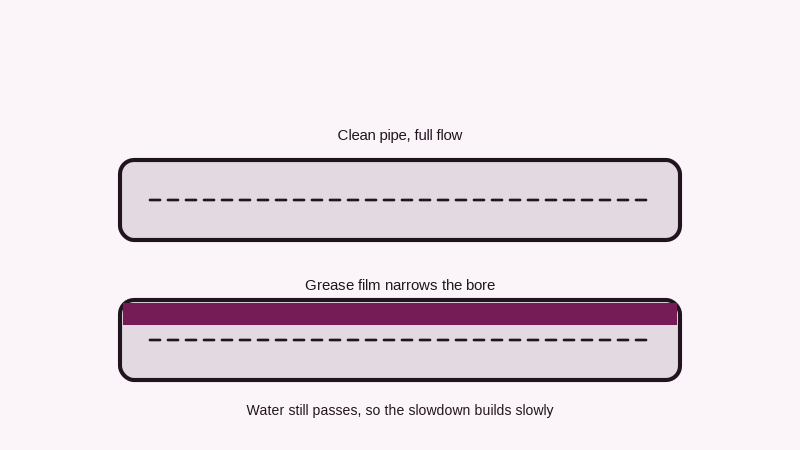
With a garbage disposal, ground food turns into a paste that settles into the same narrowing. A double sink on a shared trap can drain at different rates on each side. Check whether the dishwasher drain joins the disposal or the trap. A dishwasher that leaves water at the bottom often signals the same partial blockage.
What to try: remove standing water, run the tap hot for a moment, then plunge over the drain with a cup plunger while the other side is blocked or the overflow is covered with a wet cloth. If nothing changes, put a bucket under the trap, unscrew the slip nuts and clean it by hand. Our step-by-step guide to unclogging a kitchen sink shows the order.
What causes a bathroom basin to drain slowly?
Hair and soap scum are the usual offenders, collecting on the stopper arm and in the first stretch of pipe below the drain opening. Pulling and cleaning the stopper often fixes it. If not, the trap below is next. Clean it by hand rather than pouring chemicals down the drain.
Behind the faucet, bathroom sinks have a pivot rod that raises the stopper, and on many the stopper can be lifted out or twisted free. Take it out and you will probably find a clump of hair on its underside. Clean it, rinse it and put it back. If the sink still lags, set a bucket under the trap and take it apart. Our guide to fixing a slow bathroom sink drain and the page on unclogging a bathroom sink give the steps.
Use drain cleaners carefully. Chemical products can damage old pipes, splash skin and eyes, and endanger a plumber who later opens a sink where they were left standing. Never combine them. Start with a plunger or hand tool, and bring in a plumber if those fail.
When does a slow drain call for a plumber?
Hire one if more than one fixture is slow, water backs up out of a different drain, a drain gurgles, the smell returns after cleaning or clearing the trap does not work. Each suggests a blockage in a shared line, which needs a cable or camera. Send the details through the quote form.
More signs worth acting on: water leaking from the pipe or inside the cabinet under the sink, a sewage smell in the room, a drain that was slow for years and has now stopped, and one that clears and then slows again within days. A plumber will clear the line and name the cause. If the cause is structural, such as a sagging or broken pipe, a camera shows it and the quote can cover the repair. For price terms on clearing a sink, see what a plumber charges to unclog a sink.
Common questions
How do I unclog a slow drain without chemicals?
Lift out the stopper or strainer and clean it, then plunge with the overflow blocked. If that fails, put a bucket beneath the trap, unscrew it and clear it by hand, or use a small drain snake. Reassemble, run water and watch for leaks. Chemical cleaners are the last step, not the first.
Can a slow sink drain cause damage?
Yes. Standing water breeds bacteria and odors, and a partial blockage can become complete and back up into the sink. Pressure behind a blockage can also strain old joints and start a leak under the sink. A slow drain that comes back after cleaning needs a closer look, not another round of the same fix.
Why does my sink drain slowly only after rain or at certain times?
If a drain slows after heavy use, the line is probably partly blocked, and only the extra load reveals it. If it slows only after storms, the shared sewer line may be involved. Have a plumber check the line, and note when it happens. That detail is a big help for the diagnosis.
Is a slow drain a sign of a bigger problem?
Sometimes. One slow sink is generally a local matter. Slow drains at several fixtures, gurgling or backups point to a main line or vent issue. Old pipes with rough inner walls also make clogs return. A plumber can run a camera through the line and say which of these applies.
Does a slow drain mean I need new pipes?
Usually not. Most slow drains clear with cleaning. Replacement pipe is worth considering only when a camera shows damage or heavy corrosion, or when clogs return soon after cleaning. Before agreeing to any big job, ask to view the camera footage.