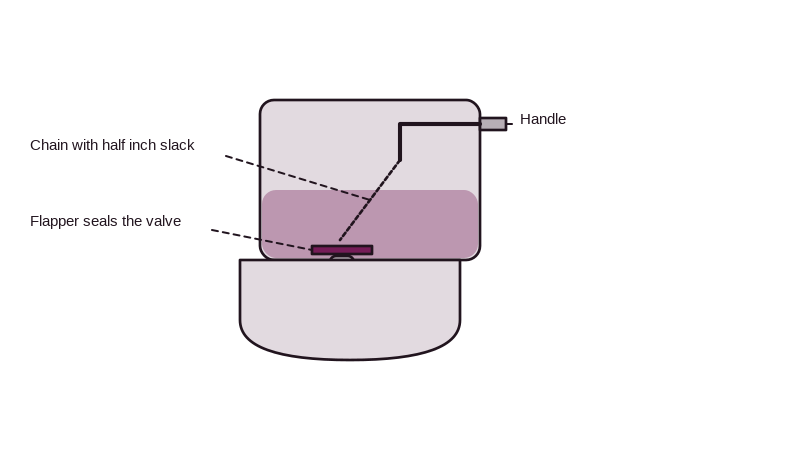
Most weak or failed flushes come from three parts inside the tank: the handle and its arm, the chain that lifts the flapper, and the flush valve the flapper seals. Fixing the handle or the chain takes minutes. A worn flush valve takes longer but is still a common weekend repair for a Sylmar homeowner. If the toilet is clogged or leaking onto the floor instead, the Mission Point Plumbing home page points to the right guide, or you can send the quote form and it is forwarded to a nearby plumbing business.
Why is the flush weak or missing?
A toilet that will not flush has lost one of three things: lift, water or drainage. Lift trouble means a loose handle or slack chain. Water trouble means a low tank level or a blocked fill. Drain trouble means a blockage beyond the bowl. Take off the tank lid and watch one flush, and the cause becomes clear.
Take the lid off carefully, since it is porcelain and heavy, and set it somewhere it cannot fall. Then:
- Press the handle. If the arm inside moves while the flapper stays put, the chain is slack or has slipped off the arm.
- If the handle spins loose and does nothing, the nut that holds it is loose or the arm has broken.
- If the flapper rises and the tank drains but the bowl hardly moves, check the tank's water height against the line marked on the overflow tube or tank wall. Too low gives a feeble flush.
- If the bowl fills almost to the rim and drains slowly, you have a partial clog, not a flush fault. Repairing a blocked toilet covers that.
At what point does a flush problem need a plumber?
Bring in a plumber when the toilet leaks at the base, the bowl or tank is cracked, a clog keeps returning, water appears on a wall or the ceiling below, or your own repairs fail. A clog that recurs can indicate trouble farther down the drain line.
More reasons to hand the job over:
- The shutoff valve behind the toilet will not close or leaks. Toilet shutoff valve repair explains that fix.
- The toilet rocks and the wax ring has failed.
- You smell sewer gas or see water around the base.
- The toilet is a pressure-assist model.
In an apartment, a landlord is usually responsible for plumbing repairs, so report it in writing. Panorama City and Canoga Park have many renters, so that is common across the north Valley. California Civil Code 1941.1 sets out habitability rules, but we have not checked its wording for this page, so read it on the official California legislature site if you need it.
To get a local plumber arranged, send the quote form with your address, the toilet's age if known and what happens when you flush. Requests are handled Monday through Friday, 9am to 5pm. The details go to a plumbing business that contacts you and gives a written quote ahead of any work.
What causes a toilet to need repeated flushes?
A toilet that takes more than one flush has a flow problem. Usual causes include partly blocked rim jets, too little water in the tank, a flapper that drops too soon, or mineral scale in the rim holes. A partial clog in the trap or drain can also mimic a weak flush.
Work through these in order:
- Raise the water level. Adjust the float on the fill valve so the tank refills to the marked line. See repairing the toilet fill valve.
- Clean the rim jets. Under the rim, small holes feed water into the bowl. Scale blocks them. Run a small mirror along the rim to look, and clear them with a wire or a small brush after dissolving scale with vinegar.
- Check the flapper timing. If it drops early, lengthen the chain slightly or replace the flapper.
- Rule out a clog. If plunging lowers the bowl level and the next flush is stronger, a partial blockage was the cause.
Many Sylmar homes date from the 1950s to the 1970s, and toilets from that era use more water per flush than newer ones but tend to have wider, simpler valves. Even so, a toilet that has flushed the same way for decades will gather scale, so check the rim jets. Scale forms faster in harder water, so look at the yearly Drinking Water Quality Report from your supplier for hardness. LADWP, the utility for Sylmar and the City of Los Angeles areas of the north Valley, publishes one annually.
How is a flush valve replaced?
The flush valve is the wide drain opening in the floor of the tank, sealed by the flapper. If its seat is pitted, or the valve leaks around its base, water escapes without a proper flush. The cure is to empty the tank, separate it from the bowl and install a new valve, a larger task than a handle or flapper.
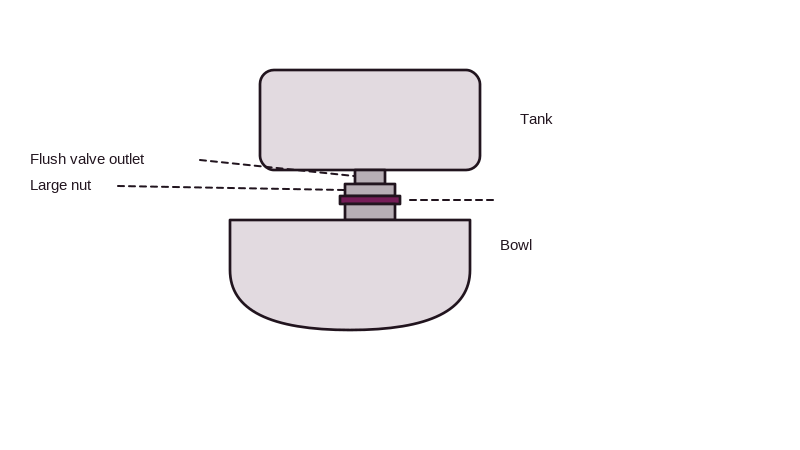
Signs the valve is at fault rather than the flapper:
- A new flapper still leaks.
- You can feel roughness or mineral buildup on the seat with a fingertip.
- Water weeps around the valve's base at the tank floor.
- The toilet is old, with a brittle plastic or corroded brass valve.
Steps to replace one:
- Shut off the supply, flush, and sponge out the remaining water.
- Disconnect the supply line and undo the nuts under the tank that hold it to the bowl.
- Lift the tank off and rest it on a towel. A pressure-assist toilet is a stopping point, because those need a plumber.
- Unscrew the big nut beneath the tank, remove the old valve and seat the new one with its gasket.
- Put the tank back using new bolts and gaskets, tightening them alternately and evenly, then reconnect the supply and check for leaks.
Cracked porcelain is common when tank bolts are overtightened. If the gaskets between tank and bowl have crumbled with age, a new toilet may be cheaper over time. See what a toilet replacement involves.
How much slack should the flapper chain have?
Leave roughly half an inch of play in the chain while the flapper is shut: enough for the flapper to lie flat, yet not so much that the handle pulls the chain taut without lifting the flapper. A tight chain makes the flapper leak, and a loose one weakens the flush because the flapper opens only partway.
Adjusting it is easy. Hook the clip onto another link, or pull the chain through the clip to shorten it. Cut off any long tail, since a loose end can curl under the flapper and stop it sealing. A chain that has rusted or kinked is worth replacing.
When you adjust the chain, flush several times and watch the flapper. If it closes before the bowl has emptied, the chain is too short, which makes the flush stop early. If it never quite seats, it is too tight. Replacing the flapper itself is covered by toilet flapper repair.
How do I repair a loose or broken flush handle?
Begin by snugging the mounting nut inside the tank. Most toilets use a reverse thread, so clockwise loosens and counterclockwise tightens. If the handle is still wobbly or the arm is bent, a new handle assembly is inexpensive and takes about ten minutes and a wrench.
Typical sequence:
- Close the supply valve behind the toilet and flush to empty the tank.
- Detach the chain from the arm.
- Undo the nut that secures the handle from inside the tank and draw the old handle out the front.
- Install the new handle and nut, hand tight plus a quarter turn. Overtightening cracks porcelain.
- Hook the chain back on with a little play, reopen the valve and test.
Handles come in front, side and angle mount types, so photograph the tank before you buy, or carry the old handle to the store. If the handle sticks in the down position, the arm may be rubbing the lid or the tank wall, which you can fix by bending or repositioning the arm slightly.
Why does the toilet keep running after a flush?
A toilet that keeps running afterward has a bad flapper or fill valve. A flapper that fails to seal lets tank water seep into the bowl, and the fill valve keeps topping it up. A fill valve that never closes sends water down the overflow tube. Both waste water.
To test the flapper, add a few drops of food coloring to the tank. The EPA suggests this check: color showing up in the bowl after 10 minutes means a leak. Flush right away so the dye does not stain the tank. The EPA also reports that household leaks average over 9,300 gallons wasted per year, with a running toilet a frequent source.
For detail, see why a toilet keeps running and a toilet that will not stop running. Fill problems are covered on the toilet inlet valve page.
Common questions
What if the toilet will not flush all the way down?
Check the tank water level first, then the chain slack, then the rim jets. A low tank, or a chain that lifts the flapper only partway, produces a weak flush. If both are fine and the bowl drains slowly, a partial clog is likely and the trap needs plunging or an auger.
Are the flush valve and flapper the same part?
No. The flush valve is the drain opening at the tank floor, and the flapper is the rubber seal that rests on it. Swapping a worn flapper is quick and cheap. A worn valve seat, or a valve leaking at the tank base, is a bigger repair that requires lifting the tank.
Can I fix a flush handle myself?
In most cases, yes. Snug the nut inside the tank, remembering the reverse thread, and replace the handle if the arm is bent or stripped. You need a wrench and about ten minutes. Shut the water at the valve and flush first to empty the tank.
Why is the flush weak when the tank fills normally?
A weak flush with a good water level points to blocked rim jets, a partial drain clog or a flapper that closes too soon. Clear scale from the rim holes with vinegar and a small brush, and check the chain length. If plunging helps for a while, a deeper clog is probable.
How old is too old to repair a toilet?
If parts are hard to match, the porcelain is crazed or cracked, or the same fault keeps coming back, replacement may be wiser. We cannot judge from here; a plumber can inspect it. Request a written quote for a new toilet so you can compare it with another repair.