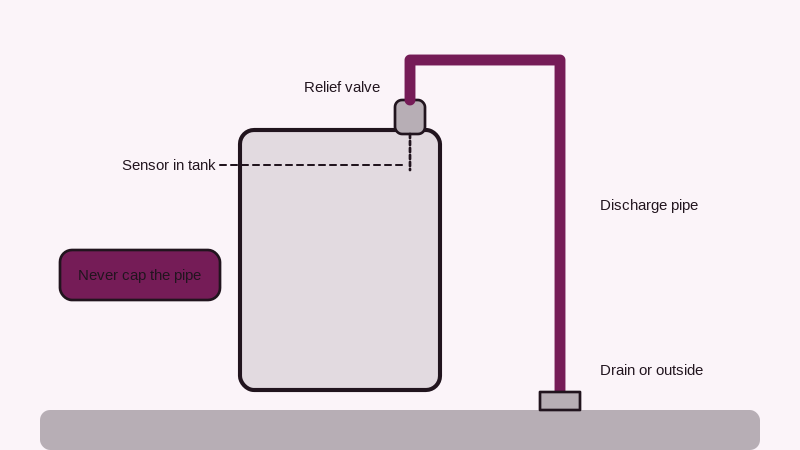
The relief valve should be replaced if it leaks, drips, fails to reseat, has corroded shut, or did not pass a test lift when a plumber checked it. It lets water out when the tank overheats or pressure goes too high, so a faulty one is a safety threat, not a mere annoyance. This topic sits within the wider water heater repair guide, and the work is for a plumber.
What is the job of a water heater relief valve?
Often called the T&P valve, it is mounted on the tank and opens by itself when the water gets too hot or the pressure climbs too far. Water leaves through a discharge pipe, so the tank never builds up dangerous force. Most plumbing codes expect that pipe to run to a safe drain or outdoors.
Inside is a spring, plus a sensing probe that reaches into the tank. If the thermostat or gas control fails and heating continues, or pressure rises because the water has nowhere to expand, this valve is the last line of defense. Without it, a heater can explode.
Look at the upper part of the tank for a small lever with a pipe running down beside the heater. That pipe, the discharge line, counts as much as the valve. A missing or capped pipe, or one that ends where hot water would hit a person, makes the setup wrong even if the valve is fine.
Tankless heaters work differently, and many have no tank to relieve, though systems with storage or a boiler carry their own relief valves. For a tankless unit, check its manual or the tankless water heater repair pages for your brand.
What signs show that the relief valve needs replacing?
Replace it if it drips or runs steadily, if water or crust shows at the outlet, if the lever is stuck, or if it will not reseat after a lift. A valve that has gone untested for many years may also be due. A steady drip can point to a pressure problem as well, so the cause matters more than the part.
Signs that call for action:
- water on the floor beside the heater coming from the discharge pipe
- mineral crust or rust on the valve outlet
- a lever that will not move, or one that moves but leaves the valve dripping
- hissing or steam from the valve
- a valve that looks old, discolored or corroded
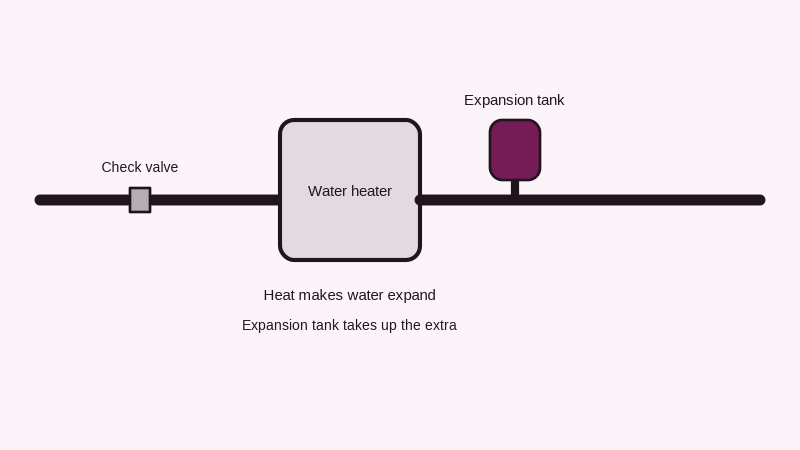
If the valve discharges water often, swapping it may not cure the problem. Thermal expansion can push pressure up whenever the heater fires, especially where the incoming supply has a check valve or pressure regulator, and an expansion tank can remove the cause. Ask the plumber why it is discharging. Expansion tank replacement covers this, and water pressure regulators touch on the same issue.
When the valve is discharging hard, cut the fuel or power. Never plug or cap the pipe. If you see steam or hear rumbling, move away and turn to emergency water heater repair.
Can I test the relief valve myself?
A few makers recommend a yearly check: raise the test lever for a moment, bucket under the discharge pipe, to confirm the valve flows and reseats. Stand clear, as the water is hot. A valve that fails to flow, or drips afterward, needs replacing. Read the heater's manual first, since advice differs by maker and a valve can fail after a test.
Take precautions: keep children and pets away, make sure the discharge pipe ends somewhere safe, lift the lever slowly and let it snap shut. If dripping goes on, stop working the lever. A valve that no longer seats after testing should be replaced, not tinkered with.
Older valves can fail when disturbed, since mineral scale may hold them open or shut. If in doubt, leave testing to the plumber on a routine visit.
You can look over the discharge pipe without touching the valve. It should point downward, match the valve in size, end near a floor drain or outdoors, and have no cap, plug or threaded end. Report anything odd to the plumber.
How is a relief valve replaced?
First the plumber turns off the fuel or power and the cold supply, relieves pressure at a hot tap, drains part of the tank, unscrews the old valve, fits a new one rated for that tank and reconnects the discharge pipe. Afterward the tank is refilled, checked for leaks and brought back to temperature. The visit is short.
Match matters: the new part must suit the tank. Valves carry ratings for temperature, pressure and size, and the plumber must choose one that agrees with the heater's label. A wrong rating is a safety issue, so ask which rating is going in.
During the visit the plumber should also inspect related parts: the discharge pipe, the shutoff valve, any expansion tank, the gas connection and the venting. In many north Valley homes the heater stands in a garage or hall closet, spaces that can hide corrosion. Mention anything you have noticed.
Gas piping, venting and any permitted work belong to a contractor holding the correct California license class. Ask whether your area requires a permit. For City of Los Angeles addresses, permits come from the Los Angeles Department of Building and Safety. We do not know what applies at your address, so have the plumber state it in the quote.
On an old heater, the plumber may suggest replacing the whole unit. Money spent on a valve for a tank that is rusting through is poor value. Get both options written down, and see the replacement timing guide.
What belongs in a relief valve quote?
Look for the valve and its rating named in writing, a description of the discharge pipe work, whether the tank is drained, any permit, and the total stated ahead of the start. It should also say whether an expansion tank or another fix is advised for the underlying cause. This site shows no dollar figures.
Questions for the plumber:
- Why is the valve discharging, and is the fault in the valve or in the pressure?
- What is the new valve's rating, and does it match my tank's label?
- Is the discharge pipe correct, or does it need changes?
- Do I need an expansion tank?
- Does this job need a permit, and who files for it?
- What deposit is requested, and when is the balance due?
In California a deposit is generally limited to the lower of a fixed ceiling and 10 percent of the contract price, and a contractor license is needed once a job exceeds a small-job cost threshold. Look the license up on the CSLB site. How plumbers itemize heater work is shown in what drives replacement cost.
A request goes in through the quote form; Mission Point Plumbing lists the other services.
Common questions
What makes a heater's relief valve leak?
Water is escaping past the valve. A worn seat, mineral buildup, or real pressure or temperature trouble in the tank may be the reason. Thermal expansion is common in homes with a check valve on the supply. A plumber should test the pressure and replace the valve if needed. Never cap the pipe.
Why must a relief valve discharge pipe never be capped?
Capping or plugging it defeats the safety device, so an overheating heater can build dangerous pressure. Keep the pipe open, pointed downward and ending where hot water will not hit anyone. If it drips onto the floor, find the cause with a plumber instead of blocking it.
How often should a relief valve be replaced?
No single interval fits every valve. Many manufacturers advise testing yearly and replacing a valve that fails the test, drips or looks corroded. A valve on an older heater is often changed along with the heater. Follow your manual, and ask the plumber at any visit whether yours is due.
Can I change the relief valve myself?
Hot water, pressure and sometimes gas are involved, and a mistake disables a safety device. Some owners manage it, but a plumber is safer, and anything needing a permit must be handled by a contractor with the proper California license class. At minimum, shut the water and the power or gas first.
Why does the new valve still leak?
Frequently the new valve is fine and pressure is the cause. Thermal expansion raises pressure each time the heater fires if water cannot flow back into the supply. An expansion tank, or a replacement for a failed one, is the usual remedy. A loose connection or a valve with the wrong rating are the other common causes.