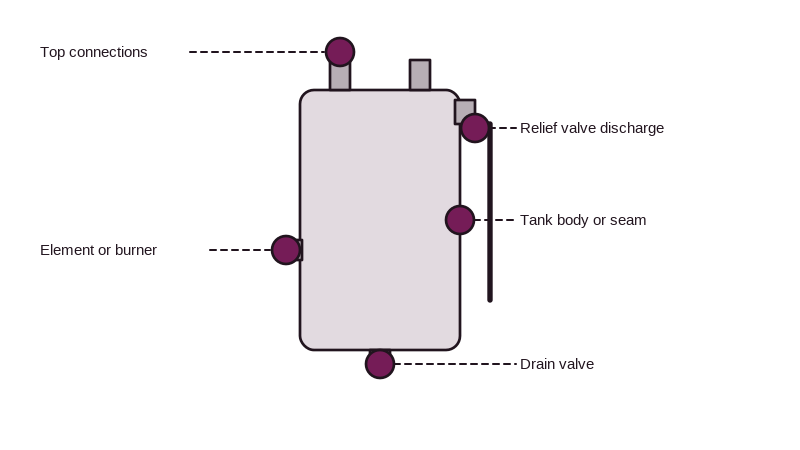
Begin at the heater itself: switch off the electricity or gas, shut the cold inlet valve and follow the moisture back to where it starts. A drip at a fitting, valve or the pipe joints above can normally be repaired. Seepage from the tank body or base means the tank has failed and must be replaced. For the wider picture, see our page on water heater repair.
Across Sylmar and the north Valley, heaters tend to sit in garages or hall closets, so a slow drip can go unseen for weeks. Look at the floor around the unit from time to time, and check the drain pan if one is fitted.
What should I do first when a water heater starts leaking?
On an electric heater, turn the breaker off; on a gas model, turn the gas control to its off position. Close the cold water valve at the top of the unit. After that, contain the spill, mop up and note where the water appears. Stay away from wiring in a wet room.
Mixing water and electricity is dangerous. If the floor is flooded and the panel is close, keep out and call in a plumber or an electrician. Smelling gas means leave the building and alert your gas utility from outside. Contact 911 whenever someone is in danger.
Scalding is a risk. Do not put bare hands near the drain valve, and give the tank time to cool before you touch anything. Keep children and pets well back.
Where on the heater is the water coming from?
Look at five places: the pipe joints on the top, the pressure relief valve and its discharge pipe, the low drain valve, the burner or element compartment, and the tank body or base. Each has its own remedy, and water from the tank itself means replacement.
Wipe every spot dry with a paper towel and watch for the first drop. Slide a hand down the relief valve pipe as well. A drip there can mean a bad valve, or pressure or temperature that is too high.
Read the age on the label. Tanks near the end rust from the inside out, and brown streaks or seepage along the casing seam show the tank is finished. The replacement timing guide lists the usual age signs.
How do I repair a leaking joint or valve?
A weeping threaded joint on top may need only a slight snug with a wrench. If drips continue, drain the line below and redo the joint using fresh thread tape or sealing compound, and replace any flexible connector. Close a dripping drain valve firmly, and replace it if it keeps leaking.
Because the relief valve safeguards the tank, a plumber should replace one that drips. Never plug or cap it. The reasoning is on the relief valve replacement page.
A failed expansion tank, if the house has one, can also cause leaks and relief valve drips; see expansion tank replacement. Owners should leave gas fittings alone, so a leak near the gas line goes to a contractor holding the correct California license class.
Is there any way to repair a leaking tank?
No. Water coming through the steel shell or base means the metal has rusted through, and a patch will not last. The heater must go. A slow weep may continue for a time, but it is a warning, and tanks sometimes fail all at once. Close the water supply and line up a replacement before a flood.
An anode rod is made to rust in the tank's place, and replacing it can extend a tank that is still healthy. Once it is spent and the tank already leaks, that window has closed. Read about anode rod replacement.
Weigh your options before buying: tank or tankless covers the tradeoffs, and the replacement plumber page walks through a replacement visit.
Should I put in a tankless heater on my own?
Buying one is simple, but installing it involves gas piping, venting, electrical connections and often fresh water and condensate lines. California regulates gas piping, and a replacement normally needs a permit. Hire a contractor with a proper California license rather than working at home.
Poor venting can release carbon monoxide, which is invisible and odorless, and a gas leak brings fire risk. A faulty connection can also void many warranties, since manufacturers often require a professional installer.
The gas tankless installation page explains what such a project involves. Permit needs differ by type of work, so ask the City of Los Angeles Department of Building and Safety (LADBS) before starting.
What if the leaking heater stands in a garage or hall closet?
A garage or hall closet often has no floor drain, so a leak can travel beneath walls. A drain pan piped outside helps. If water reaches stored boxes or flooring, lift them out, dry the area with fans and watch for mold in the following days.
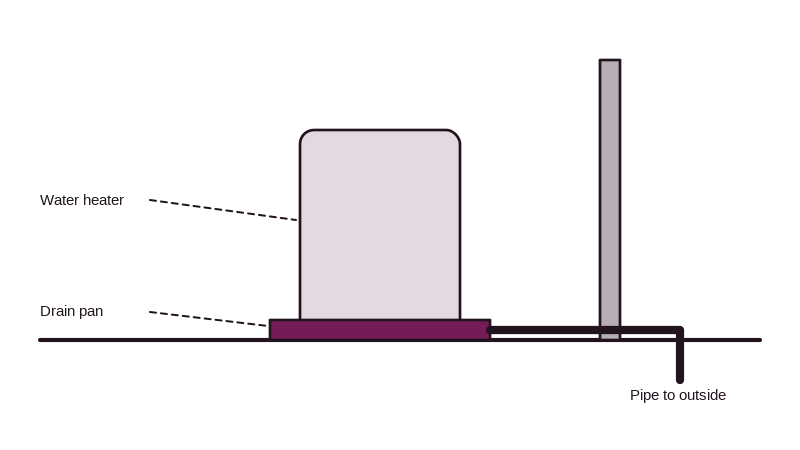
In older north Valley houses the heater often rests on a platform in the garage. Ask the plumber to check the wall straps and the platform for strength, since a leak can corrode them.
Need help fast? Head to emergency water heater repair. A complete account of what a plumber does about a leaking heater sits in plumber for water heater leak.
At what stage is a plumber the right call for a heater leak?
Bring one in when the tank body leaks, water reaches electrical parts, gas is involved, the relief valve will not stop dripping, or you cannot find the source. The plumber identifies the cause, mends what can be mended and replaces the heater if the tank is gone.
Request a quote to begin; Mission Point Plumbing passes what you enter on to a local plumber, who makes contact afterward. Submissions are read on weekdays from 9am until 5pm. Describe the heater type and location, and anything you have tried already. More is on the Mission Point Plumbing front page.
On the written quote, look for the repair or replacement named outright, plus any permit, haul-away and the warranty. Collect more than one before choosing. Since age lies behind many failures, tell the plumber how old the unit is. Some Heating Air Conditioning businesses also work on heaters, and whoever comes should explain how the new unit connects to water, gas or power, and who holds the license for that part.
Common questions
How many hours does a water heater leak repair take?
Mending a fitting or valve takes around an hour. A new heater takes several hours, longer when a permit and inspection are involved. Once the plumber has seen the leak, they should say whether repair works and how long it will take. Expect to be without hot water during the work.
Which questions go to the contractor when a heater leaks?
Find out whether the leak can be mended or the tank is finished, what each path involves, if the quote includes the permit and haul-away, and which warranty applies. Ask for the contractor license number and check it with the state licensing board. Put the scope in writing.
Must someone be home for the plumber's visit?
Yes, an adult has to give access to the heater and agree to the plan. The water is turned off for part of the visit. Clear the space around the unit and keep pets secured. You need not watch each step, but stay reachable and test the hot water once the plumber finishes.
Is a leaking water heater a hazard?
Yes, it can be. Leaks bring water damage and mold, and water near electrical parts can shock someone. Gas leaking near the burner, or any gas odor, is an emergency. Turn off power or gas if that is safe, close the water inlet and get help promptly.