Suppose the heater is switched on, the burner fires or the tank hums, yet taps run cold or merely warm. Then the trouble is typically a failed part inside the tank, a mixing or shutoff valve, or a fixture letting cold water in. The tank makes hot water as normal, then loses it on the way out. Wider repair coverage lives in the Sylmar guide to water heater repair. This page deals only with the narrower case where the heater looks healthy.
Why is the heater on but my taps stay cold?
Likely culprits include a snapped dip tube, a burned-out heating element or bad thermostat on an electric model, a pilot or burner problem on gas, built-up sediment, a mixing valve that has stuck, or a shower cartridge letting cold water in. A tank can feel warm to the touch while the water at your tap is not.
One fast way to separate the cases: when every hot tap in the house gives cold or lukewarm water, blame the heater or its valves. When only a single tap or shower acts up, the fixture is the problem. Test a bathroom sink, the kitchen sink and a shower in turn. Fixture-side causes are covered for a cold-only shower and a kitchen faucet that never warms.
Could the dip tube be broken?
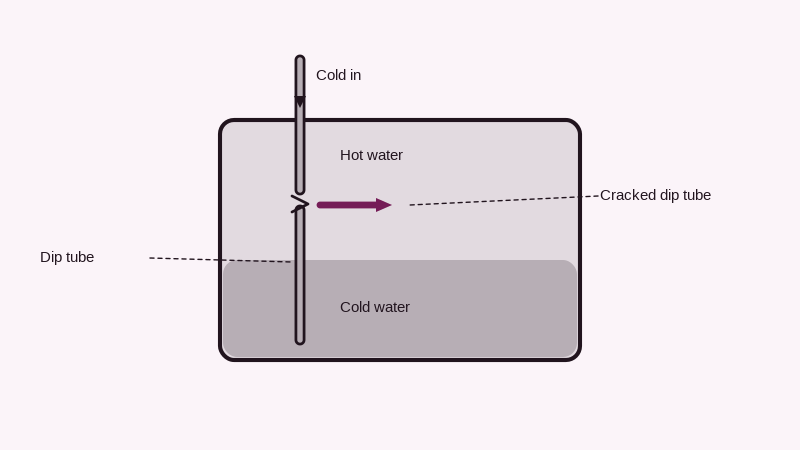
Yes. The dip tube is a plastic pipe inside the tank; it carries incoming cold water down to the bottom, keeping it apart from the hot water at the top. Once it cracks or snaps, the cold stream mixes right into the hot, giving lukewarm output that fades fast. Heaters built in one particular production period are especially prone to this.
Signs include lukewarm water, short showers, and tiny white bits of plastic collecting in aerators and screens. The repair is modest: the water is shut off and the tank drained first. On an old tank, ask whether a new one is the wiser buy. Details are in dip tube replacement.
Is it the heating element or thermostat on an electric water heater?
In an electric heater, the common causes are a dead upper or lower element, a high-limit switch that has tripped, or a thermostat gone bad. A failed lower element still produces a small volume of hot water before it runs out, while a failed upper element frequently produces none.
Panels hide the elements, thermostats and reset button, and the wiring behind them is live. Turn the breaker off before you open anything, and keep metal tools away from live terminals. Should a meter test feel beyond you, stop there and bring in a plumber or electrician. Replacing elements is routine for plumbers, as described under replacement water heater elements.
Could a gas water heater's pilot or thermocouple be the cause?
On a gas unit, an extinguished pilot, a failing thermocouple or a dirty burner can leave a tank of cold water and no heat. A flame that keeps dying often means the thermocouple has stopped sensing it, so the gas valve shuts off again.
The lighting steps are printed on the heater's label. Try once, carefully; if the pilot still refuses to stay lit, stop, since repeated attempts let gas build up. At any gas smell, leave the building, flip no switches, and report it to the gas utility or 911 once outside. Under California law, gas piping is contractor work. Our thermocouple replacement page has more.
Can sediment or a tired tank cause no hot water?
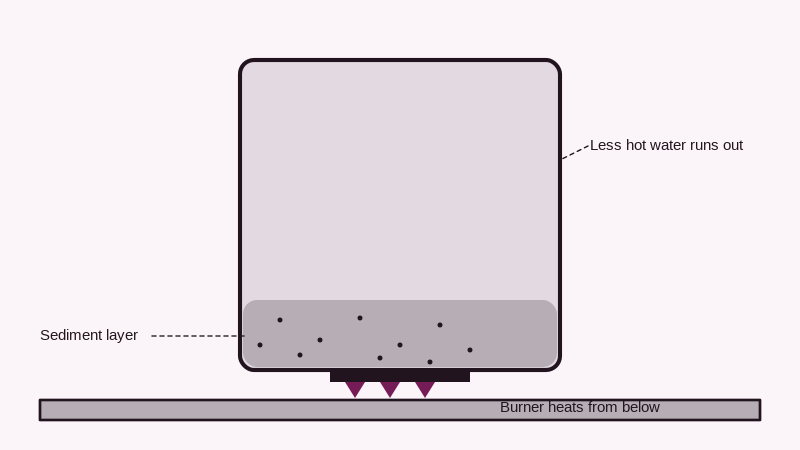
Sediment collects on the tank floor. In a gas heater it shields the water from the burner, and in an electric one it covers the lower element. The result is less hot water, slow recovery and noise. Flushing may help if the tank is still sound.
Age matters too. A unit close to retirement tends to leak, rumble and run dry quickly. A wet floor under the tank means closing the water supply along with the electricity or gas, then handling it as a leak. According to the EPA, household leaks waste more than 9,300 gallons of water per year on average, so even a drip deserves action. A tank that leaks gets replaced, not repaired. See water heater leak repair.
What if the problem is a tankless unit?
When a tankless unit fires up but delivers no hot water, typical causes are weak flow, a clogged filter, scale buildup, a vent or ignition fault, or a fault code on the display. The unit needs a minimum flow to ignite, so a trickling fixture may never trigger it.
Read any code on the display, confirm the gas valve stands open, and inspect the inlet filter for debris. Scale becomes a top cause after a few years. Ask the plumber about flushing and whether service valves are fitted. Usual steps are described in Navien tankless repair.
Is mending the unit worth it, or is a new one due?
A leaking tank gets replaced. An aging unit with repeated breakdowns deserves a replacement price next to the repair price. If one cheap part is to blame, fixing it is reasonable. Have the plumber write both options down, together with the unit's age.
Replacing a heater normally requires a permit; check with the plumber, then confirm with the City of Los Angeles Department of Building and Safety for your address. The person doing the work should hold a California contractor license, and the quote should name who applies for the permit. For cost comparisons, see the page on water heater replacement.
What can I do right now to stay safe?
Avoid raising the thermostat for more heat, because very hot water scalds quickly. Do not open access panels on an electric heater that has power. Water on the floor means closing the heater's supply valve and cutting its electricity or gas.
To ask for help, fill in the quote form at Mission Point Plumbing. Requests are read on weekdays between 9am and 5pm, after which a plumber nearby arranges a visit. Include what type of heater you have, roughly how old it is, the symptoms, and which taps are affected.
Common questions
Why is there hot water at first, then it goes cold?
Typically the small reserve of hot water has been used and the heater is not catching up. A dead lower element, a dip tube fault, sediment or an undersized heater can each be behind it. Tell the plumber how many minutes the hot water lasts; that detail makes the cause easier to isolate.
Why do I have hot water in the bathroom but not the kitchen?
When some taps run hot, the heater itself is fine. At the kitchen tap, look at a clogged aerator, a worn cartridge, a closed valve or crossed supply lines. Unscrew the aerator and look for debris. If the tap still runs cold, the plumber inspects that fixture, not the heater.
Is a pilot light that keeps going out a danger?
It can be. A flame that keeps dying may point to a bad thermocouple, a draft or a fault in the gas supply. Do not keep relighting it, and at any gas smell, walk out and tell the utility from outside. Work on a gas heater is for a contractor.
Can a water heater work and still need replacing?
Yes. A heater in its last years can still produce some hot water while rusting from the inside, and leaks may begin without any warning. Ask the plumber for its age, its condition and a written comparison of mending it versus a new one.
What is the usual time for a heater repair?
An element, a dip tube or a thermocouple can often be handled in a single visit, whereas installing a new tank runs longer and may bring a permit inspection. Look for the expected timing on the plumber's written quote before you agree to the work.