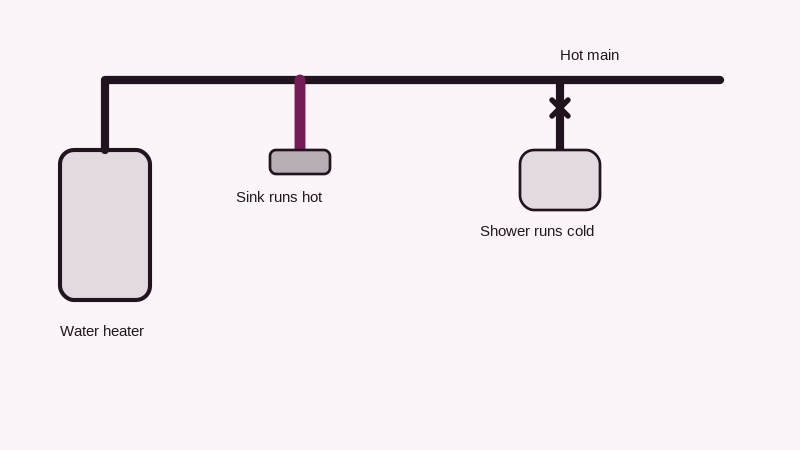
When the sinks in the kitchen and bathroom deliver hot water but the shower does not, the fault almost always sits in the shower: a worn cartridge, a failed mixing or pressure-balance valve, or a clogged hot side. If every hot tap runs cold, the heater is the suspect, and the water heater repair guide is the place to begin.
Is the problem in the shower or in the water heater?
Run hot water at the closest sink, then at the shower. A hot sink and a cold shower put the fault in the shower valve or its supply. Cold at both means the heater or its supply has failed. Two minutes of testing at different taps spares you a visit aimed the wrong way.
Test carefully. Open the sink's hot tap and wait, since hot water takes a minute or two to travel from the heater. Then try the shower on full hot, and a second bathroom if there is one. Write down which fixtures run cold and which run hot.
A pattern helps a plumber decide fast:
- Only this shower is cold: the valve, the cartridge or its supply stops are the likely cause.
- Both showers cold, sinks hot: unusual, though a shared valve or flow restriction is possible.
- Every hot tap cold: the heater, its power or fuel, or its supply.
- Hot at first, then cold: a tank running dry, a failed dip tube, a failed element or a tankless unit that cannot keep up.
When the whole house is affected, read reasons the hot water is gone. When a single sink is the issue, read the kitchen sink with no hot water.
How do I get a plumber to look at this?
Describe the situation in the quote form: which showers and taps run cold, whether the heater is gas, electric or tankless, its age and brand, what you tried, and photos of the valve and heater label. A nearby plumbing business can then judge whether it is a shower job or a heater job and quote it in writing.
Requests are read Monday to Friday, 9am to 5pm. Check the contractor's license on the CSLB website, and get a written quote before work starts. Deposits in California are generally capped at 10 percent of the contract price or a fixed ceiling, whichever is lower.
Start from Mission Point Plumbing or go directly to the quote form.
Which shower valve faults produce cold water?
Typical shower-side causes include a worn or stuck cartridge, a failed pressure-balance or thermostatic valve, mineral clogging inside the valve, a stop valve that is shut or partly shut, and a limiter set too low. Most sit behind the handle, and many can be fixed without opening the wall.
Cartridge. A single-handle shower valve uses a cartridge to blend hot and cold. As it wears or sticks, the water may travel only toward the cold side. Replacing it is routine for a plumber, though many people do it themselves. The page on repairing a dripping Delta shower faucet shows what one looks like inside.
Pressure-balance or thermostatic valve. These hold the temperature steady when a toilet is flushed or a tap is opened elsewhere. They contain an anti-scald stop, often a rotating limiter under the handle, that halts the handle short of full hot. A limiter set too low never lets the water get hot enough. A new handle or a remodel can leave it out of adjustment.
Mineral deposits. Scale builds in valves and showerheads. Where water is harder, deposits can narrow the hot port while the cold port stays open. LADWP's yearly drinking water quality report, or your own district's, gives hardness, which differs by water source.
Stop valves. Some showers have small shutoffs behind an access panel or at the valve. If a plumber or remodeler closed one and never reopened it, it can mimic a heater fault.
Crossed or failed supply. In older homes with remodeled bathrooms, a crossed or leaking connection in the wall can send cold water to the hot side. That job means opening the wall.
If the shower also leaks at the handle or behind the wall, see plumber for shower leak.
Why does the water begin warm and then go cold?
Water that chills after a few minutes usually means the tank has exhausted its hot supply, an element or burner is failing, a dip tube has broken, or a tankless unit cannot keep pace with the flow. The heater's size relative to household demand matters. Sediment in an older tank also reduces its usable volume.
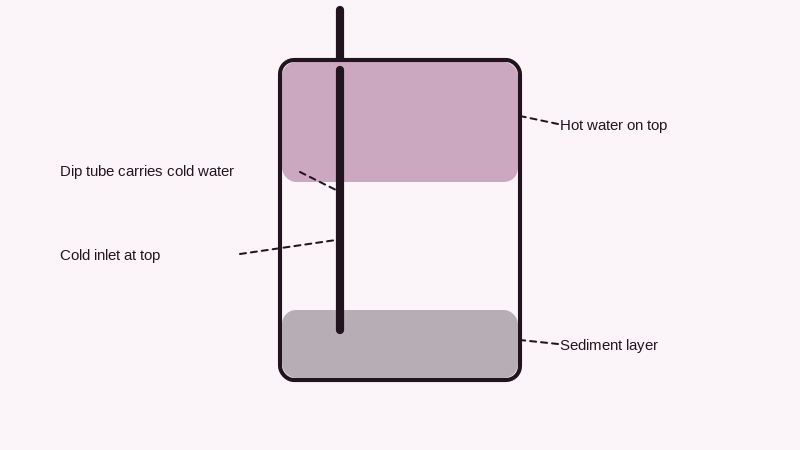
The causes in plain terms:
- Tank too small or full of sediment. A 40 gallon tank feeding a long shower and a dishwasher runs short. Sediment on the bottom takes capacity, especially in older heaters.
- Failed lower element or burner problem. Only the top of the tank gets heated, so you get a brief burst of hot water and then cold.
- Broken dip tube. The tube carrying cold water to the tank bottom breaks, and cold water mixes with hot at the top. See dip tube replacement.
- Tankless limits. A tankless heater has a maximum flow. With two fixtures running, it may fall behind, or shut off when flow drops too low. Brand pages such as Rinnai and Navien cover this.
- Low hot-side pressure. A partial blockage restricts hot water alone. Our page on low hot water pressure deals with it.
Many tract houses from the 1950s to the 1970s across the north Valley put the heater at one end and the bathrooms at the other, so hot water takes a while to arrive. If the shower is far from the heater, waiting a minute or two before judging is fair. A shower that never warms even after waiting has a fault.
If the shower is lukewarm instead of cold, check the heater's thermostat. Dials on tank thermostats are not reliable indicators of real temperature, so a plumber, or a thermometer held at a tap, gives a truer figure. Do not turn a tank far up to compensate, since very hot water can scald within seconds, particularly children and older adults.
Which tests can I safely run?
You can check whether the handle limiter stops early, open the access panel to look for stop valves, run the hot tap at a sink, inspect the heater for a tripped breaker or a lit pilot window, and look for water around the tank. Leave gas controls alone, do no rewiring and do not remove the relief valve.
If you feel capable, turn off water to the shower, take off the handle and trim and inspect the limiter. Moving it one notch toward hot can fix a shower that tops out at lukewarm. Put it back and test gradually, raising the temperature a little at a time to avoid a scald.
A stuck cartridge is a popular DIY swap, but cartridges differ by brand and model, so carry the old one to the store. Turn off the water beforehand, using the stop valves or the main.
Stop and send a request if:
- you smell gas, or the pilot will not light (go outside and contact 911 or your gas utility from there)
- water leaks from the tank, valves or the wall
- the breaker trips again once reset
- the repair would mean opening the wall, gas piping or a permit
Gas piping, venting and permit work need a contractor with the right California license. Read emergency water heater repair if the heater is at fault and leaking.
Common questions
The sink is hot, so why is the shower cold?
The cause lies in the shower valve or its supply: a worn cartridge, a failed pressure-balance valve, scale inside the valve, a limiter set too low or a closed stop valve. The heater itself is fine. A plumber can usually replace the cartridge or valve, though a crossed line in a wall requires opening it.
Why is my shower only lukewarm?
Check the rotating limiter beneath the handle first, since many valves are set to stop before full hot. After that, the heater thermostat may be low, a lower element may have died or the tank may be partly drained. Do not raise the heater far above your normal setting, because very hot water scalds.
What makes the shower chill within a few minutes?
Most often the tank ran out of hot water, the lower element or burner is failing, a dip tube broke or a tankless unit is overloaded. Other taps running at once can empty the tank sooner. Sediment in an old tank reduces its volume. A plumber can test the heater to find which it is.
Is a cold shower an emergency?
Not a safety one, unless gas smell, leaking water or electrical trouble is involved. It is unpleasant, and urgent if someone in the home is vulnerable. Shut off anything unsafe, submit the details by form and expect a plumber on a business day.
Can limescale cause a cold shower?
Yes. Mineral deposits can clog a valve, cartridge or showerhead, and a blockage on the hot side leaves only cold. The page on removing hard water scale explains how deposits form, and a plumber can clean or replace the parts.